
Yacht
Brokerage
Refined
Strategic guidance for buyers and sellers who expect more.
View All Listings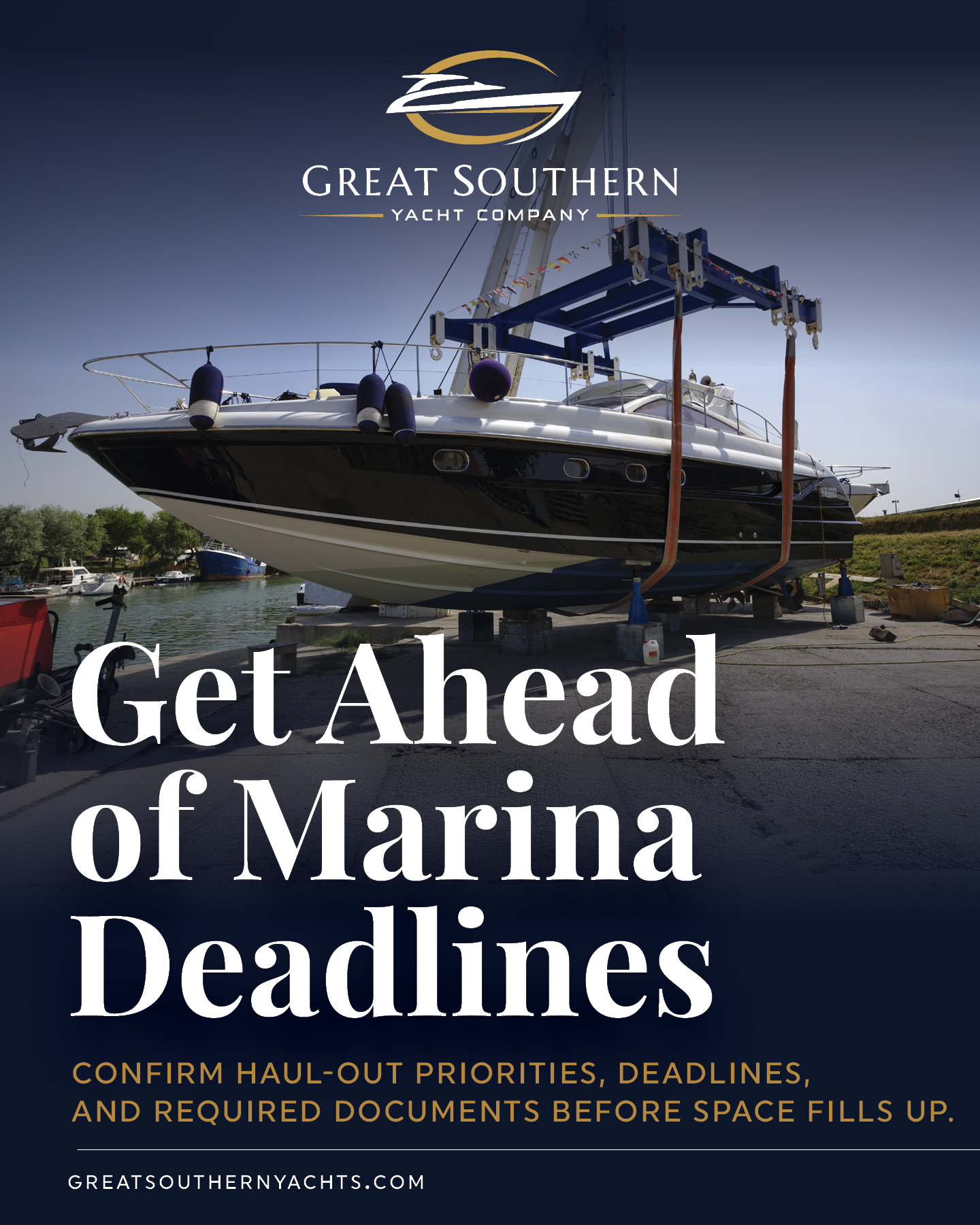
South Florida marinas fill fast—get clarity now by asking about haul-out list deadlines, their exact priority formula, and the prep documentation they require, from insurance certificates to tiedown plans
South Florida Marinas Fill Fast: What To Ask Now About Haul-Out Lists, Priority, and Prep
South Florida marinas and boatyards operate on a very different rhythm than most of the country—especially once storm season approaches. Slips fill, haul-out lists close, and policies tighten. If you own a yacht in South Florida, or are about to buy one, clarity around your marina’s rules is not optional. It’s risk management.
At Great Southern Yacht Company, we encourage every owner to treat marina planning as seriously as the yacht purchase itself. The time to ask questions is now, before the forecast changes and your options narrow.
Below are the key topics to cover with any South Florida marina or yard, and the specific questions that will give you real answers.
Start With the Haul-Out List: Deadlines and Capacity
When marinas and yards reach capacity, they default to a haul-out list to determine who gets pulled first, and who may not get pulled at all.
Questions to ask your marina today
-
When does your hurricane or storm haul-out list open and close?
- Is it a fixed calendar date?
- Or does it open when a named storm enters a certain zone?
-
How many vessels can you physically haul and block in a 24–48 hour window?
- What is your real capacity versus theoretical maximum?
- How many boats did you actually haul during the last major storm?
-
Do you maintain separate lists?
- Seasonal vs. annual customers
- Wet slips vs. dry storage
- Transient boats vs. home-ported vessels
-
What are the cut-off rules once a storm is named?
- Do you stop hauling at a certain wind forecast or watch/warning stage?
- Do you ever suspend haul-outs to focus on securing boats already in the yard?
Clear answers to these questions tell you whether your yacht has a realistic chance of being hauled when you need it most—or whether it’s time to look at alternative marinas or storage options.
Understand the Priority Formula: How They Decide Who Comes Out First
Every South Florida marina has a priority system, even if it’s not written down. You need to know exactly how they decide who moves to the front of the line.
Ask for their “priority formula” in plain terms
-
What are the top three factors that determine my place in line?
Common criteria include:- Length of time as a customer
- Type of contract (annual vs. short-term)
- Vessel size and draft
- Payment history and account standing
- Whether you are on a dedicated “storm plan”
-
Is there a guaranteed haul-out program available?
- If so, what does it cost?
- How is that guarantee documented?
- Are there any exceptions where the guarantee may not apply?
-
Do commercial, charter, or fleet vessels get priority over private yachts?
- Are government or law enforcement vessels automatically ahead of the list?
-
Is the order first-come, first-served once a storm is approaching, or is it set in advance?
- If first-come, what does “calling in time” look like in practice?
- If set in advance, can you see where you currently sit on the list?
-
Does my slip type influence priority?
- Dry-stack vs. wet slip
- In-water with storm-rated hardware vs. standard dockage
You are not asking to jump the line—you’re asking for transparency so you can plan realistically. A professional Destin or South Florida yacht broker will often review these policies with you when evaluating where to base your yacht.
Documentation They Require: Don’t Get Blocked at the Last Minute
In a tightening forecast, you don’t want to discover you’re missing a document that’s required before the yard will touch your vessel. Requirements vary, but many South Florida marinas and boatyards expect a complete package on file.
Confirm all required documentation well ahead of time
Ask your marina or yard:
-
Insurance documentation
- What minimum liability and hull coverage do you require?
- Do you require named storm or hurricane coverage?
- Do you need to be listed as an additional insured or certificate holder?
- What exact wording must appear on the Certificate of Insurance?
-
Tiedown and storm plan
- Do you require a written tiedown plan on file?
- Do you provide a standard tiedown diagram, or must I submit one?
- Are there specific line sizes, chafe gear, or hardware standards?
- Do you require photos of the boat secured in accordance with the plan?
-
Vessel documentation and ownership
- Do you need a copy of USCG documentation or state registration?
- Are there special requirements for LLC- or company-owned vessels?
- Who is authorized to approve work if I am unavailable?
-
Contact and authorization
- How many contact numbers and emails do you require?
- Can I pre-authorize haul-out up to a specific dollar limit to avoid delays?
- Do you need written consent to move or secure the yacht if I can’t be reached?
-
Special considerations
- Are there extra forms for liveaboards, tenders, or jet skis stored on board?
- Are there fuel-level or battery-disconnect requirements before haul-out?
Having this documentation complete and updated each year removes friction at the exact moment you need smooth handling.
Clarify Prep Expectations: What You Do vs. What the Yard Does
Many owners assume the marina will “take care of everything.” In practice, responsibilities are usually shared—and misunderstandings create risk.
Define responsibilities in detail
Ask your marina:
-
What tasks are my responsibility before a storm?
- Removing canvas, eisenglass, and isinglass
- Securing or removing loose gear, dinghies, and toys
- Lowering outriggers, antennas, or hardtop accessories
- Defueling to a certain level, if required
-
What tasks are handled by the yard—and what do they cost?
- Haul-out, pressure wash, and block
- Tiedown installation and strap rental
- Mast or radar arch removal (for sailboats or tall powerboats)
- Re-launch and post-storm inspection
-
What is the typical timeline?
- How much notice will I receive before haul-out?
- How quickly are boats relaunched after the all-clear?
-
Are there additional storage fees if a boat stays on the hard longer than planned?
Clear division of responsibility helps protect both your yacht and your relationship with the marina.
Integrate Marina Strategy Into Your Ownership Plan
A yacht in South Florida is not just a vessel—it’s a system that includes your marina, your insurance, your logistics, and your support team. A thoughtful owner’s plan will address:
- Where your yacht will be based in normal conditions
- Where it can be moved for storms or seasonal shifts
- Who manages haul-outs, surveys, and repairs when you’re not present
- How your insurance, marina contract, and personal risk tolerance align
As private yacht consultants, we regularly help clients compare South Florida marinas, interpret haul-out and storm policies, and coordinate logistics from the Gulf Coast to the Keys and beyond. The goal is simple: no surprises when conditions change.
If you’re considering where to base your yacht, or you want a second set of eyes on your current marina and storm plan, Great Southern Yacht Company is here as a trusted advisor. Contact us to discuss your yacht, your homeport, and the clarity you need to enjoy ownership with confidence.