
Yacht
Brokerage
Refined
Strategic guidance for buyers and sellers who expect more.
View All Listings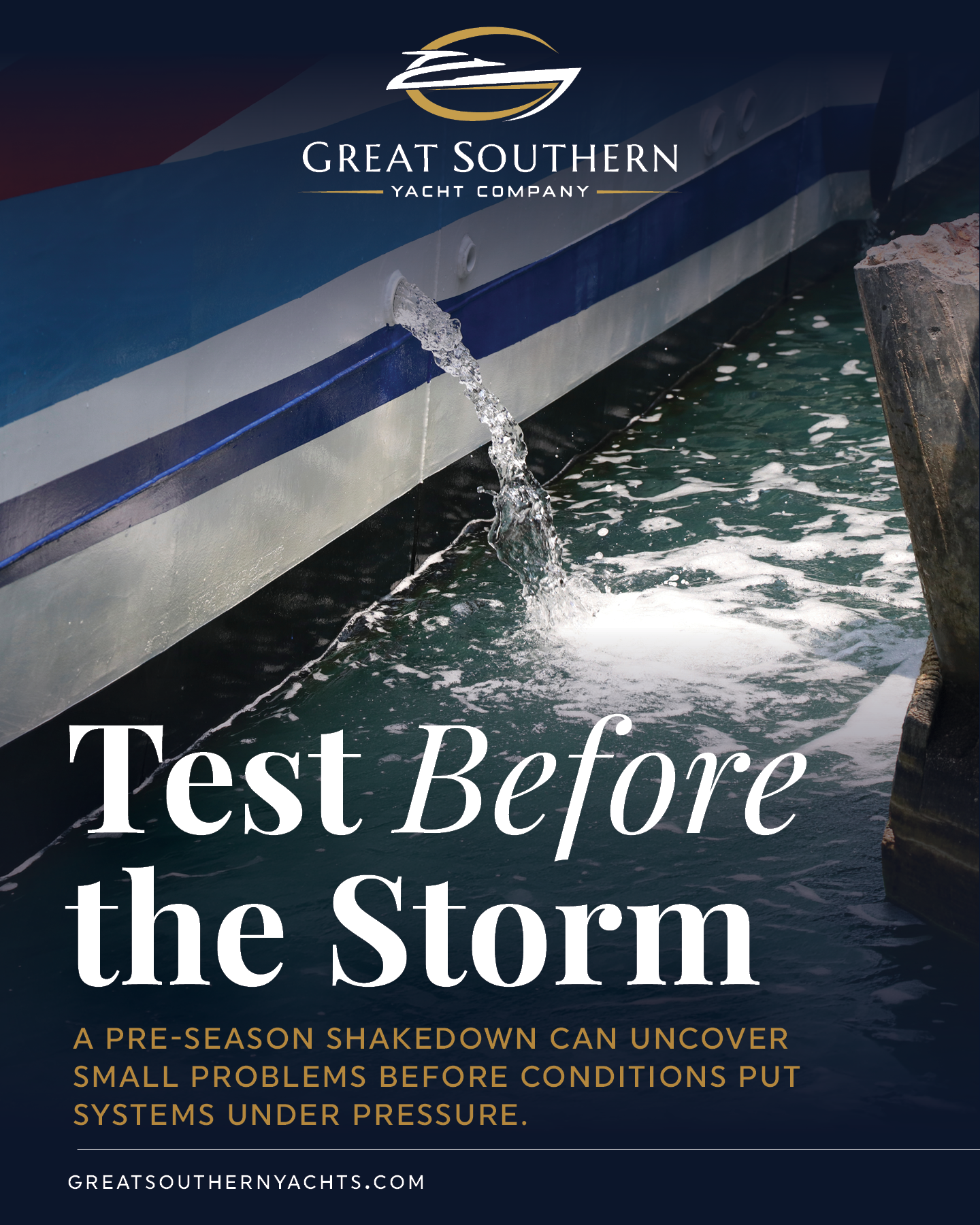
Schedule a pre-season systems shakedown to catch weak batteries, bilge pump issues, and deck hardware that won’t hold up under high-load tie configurations
Why a Pre-Season Systems Shakedown May Be the Most Valuable Day You Spend on Your Yacht
Before the season ramps up on Florida’s Emerald Coast or in South Florida, a focused “systems shakedown” can prevent the two things every yacht owner wants to avoid: surprise failures and rushed, expensive repairs.
Whether you keep your boat in Destin, 30A, Miramar Beach, Fort Lauderdale, or across the country, scheduling a pre-season systems day is one of the most cost-effective habits in yacht ownership. It’s also something we strongly encourage and help clients plan for as part of long‑term yacht consulting.
Below is a practical framework to guide that shakedown, with a special emphasis on three areas that routinely expose weaknesses once the season is underway: batteries, bilge systems, and deck hardware under high-load tie configurations.
What Is a Pre-Season Systems Shakedown?
A systems shakedown is a deliberate, structured run-through of your yacht’s critical systems under realistic load conditions before you rely on them in real-world situations.
Instead of a quick dockside check, you:
- Test components under load, not just “power on”
- Simulate real docking and mooring scenarios
- Confirm backup systems and redundancies
- Identify wear, corrosion, and marginal gear before it fails
Owners along the Gulf Coast, 30A, and South Florida often face strong currents, tight marina layouts, and crowded seasonal traffic. Those conditions are unforgiving of weak batteries, tired bilge pumps, or cleats and chocks that can’t handle high-tension lines.
Step 1: Put Your Batteries to a Real Test
Modern yachts depend on reliable DC power for everything from engines and thrusters to navigation and safety systems. Marginal batteries typically show themselves at the worst possible moment: close-quarters maneuvering, a long weekend on the hook, or a storm-induced power interruption at the dock.
How to Conduct a Battery Shakedown
Work through your entire battery system, including:
- Start banks: Main engines and generator(s)
- House bank: Electronics, lighting, pumps, refrigeration
- Thruster/windlass banks: If dedicated
Key checks:
-
Load testing:
- Use a proper load tester or have a qualified marine electrician conduct a professional test.
- Observe voltage drop under realistic loads (engine crank, thrusters, windlass, etc.).
-
Capacity and age review:
- Document battery type, installation date, and rated amp-hours.
- Most flooded and AGM batteries in a marine environment are candidates for replacement around the 4–6 year mark, sometimes earlier in harsh or high-draw applications.
-
Charging system verification:
- Confirm alternator output, shore power chargers, and any DC‑DC or solar inputs are delivering expected voltages.
- Test transitions: shore → engine alternator → generator and back, watching for anomalies.
-
Connections and cabling:
- Inspect lugs and bus bars for corrosion or loose fittings.
- Check cable runs for chafe and heat damage, especially near engines and generators.
If you are working with a Destin yacht broker, South Florida yacht consultant, or your local yard, ask them to document readings in a simple table so you can track performance trends over seasons, not just in a single snapshot.
Step 2: Stress-Test Bilge Pumps and Flooding Readiness
Bilge systems protect your yacht when you’re not aboard and buy you time when something goes wrong offshore or at the dock. A “pump runs when I flip the switch” test is not enough.
A More Rigorous Bilge Shakedown
-
Float switch function and placement:
- Manually lift float switches to confirm automatic operation.
- Inspect locations to ensure early activation and that debris won’t block movement.
-
Pump output and flow path:
- Check that discharge hoses are clear, properly looped above the waterline, and secure.
- Listen for strain or cavitation; poor sound often signals partial blockage or air leaks.
-
Capacity vs. yacht profile:
- Confirm total GPH (gallons per hour) relative to the size and configuration of your yacht.
- On larger yachts and trawlers, many owners benefit from a professional review to determine whether additional pumps or emergency dewatering options are appropriate.
-
Power supply and redundancy:
- Confirm that critical bilge pumps are wired correctly for automatic operation even if breakers are off.
- Verify fusing and breaker labeling. In an emergency, you don’t want to guess.
As private yacht consultants, we often walk clients through “what‑if” scenarios: a failed thru‑hull, a deck drain leak, or a stuffing box issue. This type of mental rehearsal, combined with a thorough bilge inspection, dramatically improves preparedness and reduces anxiety.
Step 3: Evaluate Deck Hardware Under High-Load Tie Configurations
Deck hardware problems often surface when wind pipes up, tides stack against current, or you’re forced into a less-than-ideal slip with unusual line angles. In Florida marinas and along 30A, strong storms and surge conditions are facts of life, and your cleats, chocks, and fairleads must be ready.
Assessing Your Deck Gear
During your shakedown, focus on:
-
Cleats, chocks, and fairleads:
- Inspect base plates, backing plates, and fasteners where accessible.
- Look for gelcoat cracking, movement under load, or signs of prior repairs.
-
High-load mooring scenarios:
- Simulate storm or heavy-current tie-ups using spring lines, crossed stern lines, and breast lines.
- Ensure deck hardware can handle line angles that differ from your typical calm-weather setup.
-
Dock line and fender strategy:
- Check for chafe gear, properly sized lines, and fenders suited to your hull form and dock environment.
- Review storage and deployment: can you rig a more secure tie quickly if conditions change?
-
Windlass and anchoring system:
- Test the windlass under real load, not just a quick jog.
- Inspect chain, rode, and shackles; confirm your primary and secondary anchors are correctly sized and maintained.
Experienced Florida yacht brokers and captains know that many insurance claims after a storm trace back to inadequate or poorly maintained deck hardware. A couple of hours of focused review before the season can make a significant difference.
Make It an Annual Ritual, Not a One-Time Project
Owners who treat the pre-season systems shakedown as an annual ritual typically:
- Catch small issues before they become expensive repairs
- Reduce mid-season downtime and trip cancellations
- Gain more confidence operating in tight marinas and marginal weather
- Build a cleaner service history, which supports resale value when they decide to sell their yacht
For clients purchasing a pre-owned yacht, we often incorporate a similar protocol right after closing. It becomes a baseline from which to plan upgrades, maintenance, and future cruising plans.
How a Fiduciary-First Yacht Consultant Can Help
You can conduct much of this shakedown yourself, but there’s real value in having an experienced, brand-agnostic advisor involved:
- Objective assessment: A broker or captain with no allegiance to any manufacturer can give candid feedback on vulnerabilities.
- Prioritized action plan: Not every item needs immediate attention. A professional can help you distinguish between cosmetic issues and true risk points.
- Logistics and yard coordination: From Emerald Coast yards to South Florida service centers, coordination and clear work orders save time and money.
- Long-term planning: Recommendations aligned with your cruising style, slip situation, and ownership horizon, not just the next billable job.
Ready to Plan Your Next Season With Confidence?
If you’re preparing for the upcoming season and want a structured, professional approach to your yacht’s systems shakedown, Great Southern Yacht Company can help. Our team supports owners from Destin and 30A to South Florida and nationwide with private yacht consulting, pre-owned yacht brokerage, and practical guidance grounded in real-world experience.
Contact us to discuss your yacht, your cruising plans, and how to ensure your next season starts strong.