


Yacht
Brokerage
Refined
Strategic guidance for buyers and sellers who expect more.
View All Listings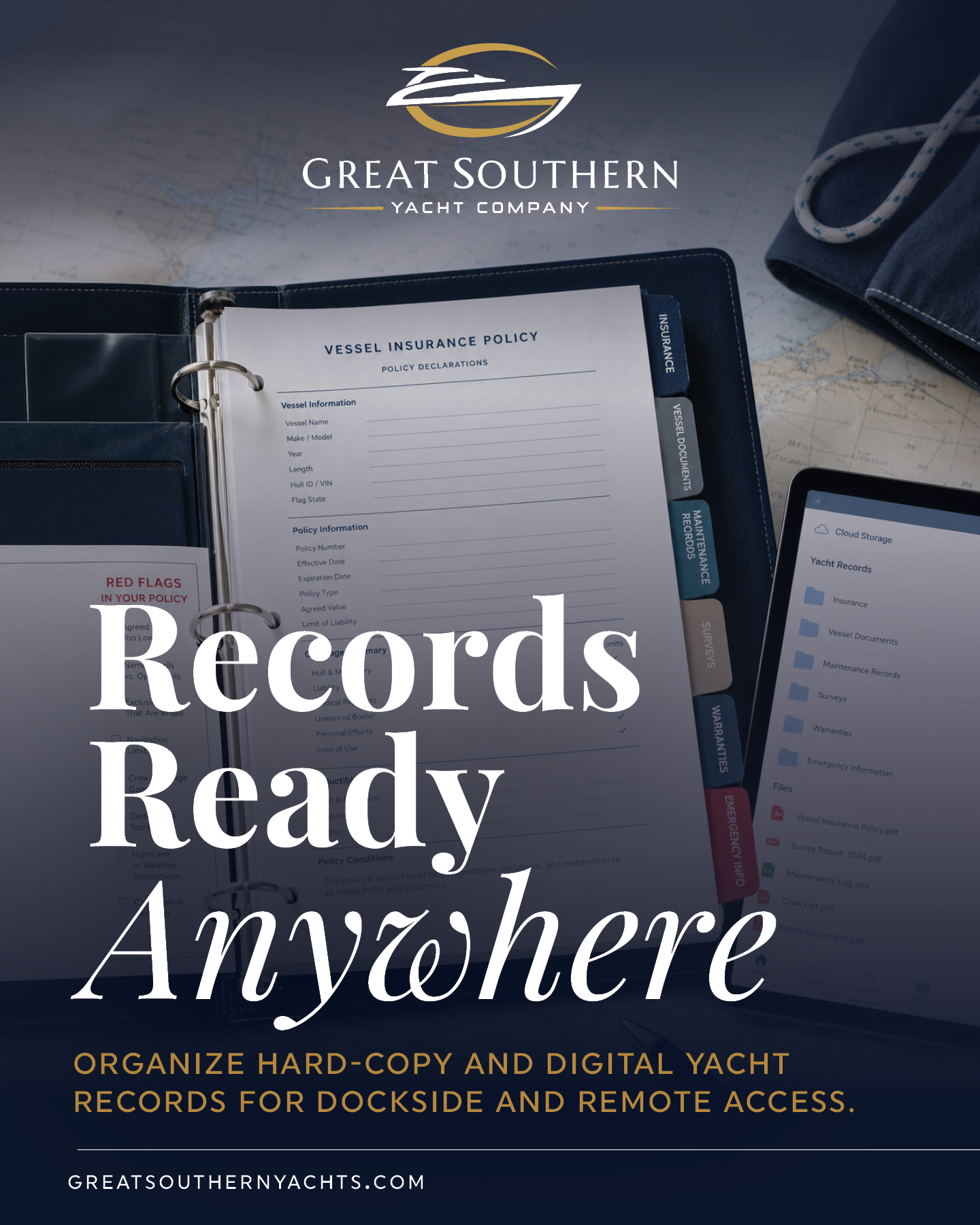
Outline a how-to guide for organizing hard-copy and digital records in parallel: binder tabs for dockside use and encrypted cloud folders for remote access, with a quick-check Red Flags in Your Policy insert
A Practical System for Organizing Your Yacht Records: Onboard Binders & Secure Cloud Folders
Paperwork quickly piles up for any yacht owner—insurance, surveys, bills of sale, maintenance records, crew documents, warranties, and more. When something goes wrong, you rarely have time to dig through email chains or a stack of loose papers.
A simple parallel system—one physical binder for dockside and onboard use, mirrored by a secure, encrypted cloud folder—keeps everything organized and accessible whether you’re at the marina, underway, or halfway across the country.
Below is a straightforward, yacht-focused how-to guide you can implement in an afternoon.
Step 1: Decide What Belongs in Your “Yacht Record System”
Start by gathering core documents. This framework works whether you’re managing a 30-foot cruiser or a megayacht.
Essential categories:
-
Ownership & Registration
- Bill of sale
- State registration and/or Coast Guard documentation
- Title documents, lien releases
- Builder’s certificate and HIN photos
-
Insurance & Risk
- Current insurance policy and declarations page
- Prior-year policies (for reference)
- Claims history and correspondence
- Copies of any appraisals or valuation letters
-
Surveys & Inspections
- Pre-purchase survey
- Insurance or lending surveys
- Haul-out and rigging reports
- Engine, generator, and systems inspections
-
Maintenance & Upgrades
- Engine and generator service records
- Yard invoices and work orders
- Major refit documentation and photos
- Warranty registrations and manuals
-
Navigation & Compliance
- Registration numbers, call signs, MMSI
- Radio licenses, EPIRB registration, Safety equipment log
- Local, state, and federal compliance documents
-
Marina, Slippage & Logistics
- Slip agreements and marina rules
- Storage and haul-out contracts
- Transport contracts and delivery checklists
-
Crew, Training & Operations (if applicable)
- Crew agreements and certifications
- Captain’s logbooks
- Operating procedures and checklists
Everything in this list should exist both as hard copy (or a reference copy) and as a digital file.
Step 2: Build Your Dockside Binder System
For onboard and dockside access, use a water-resistant, 3-ring binder with durable plastic dividers. Larger yachts may benefit from two binders: “Operations & Safety” and “Ownership & Financials.”
Recommended binder tabs
-
Vessel Snapshot
- Vessel data sheet (builder, model, year, HIN, key measurements)
- Current photos (profile, engine room, helm, key systems)
- Contact list: owner, captain, broker, marina, insurance, emergency numbers
-
Ownership & Registration
- Current registration / documentation
- Bill of sale and title copies
- Lien releases and loan documents (as needed)
-
Insurance
- Current policy and declarations page
- “Red Flags in Your Policy” insert (more below)
- Claims instructions and hotline
- Proof of insurance certificates for marinas, lenders, etc.
-
Surveys & Valuations
- Pre-purchase survey
- Follow-up surveys or inspections
- Any valuation letters used for insurance or financing
-
Maintenance & Service
- Maintenance schedule at a glance
- Most recent work orders and receipts
- Engine and generator service summaries
- Notes on next due services
-
Systems & Manuals
- Quick-reference checklists (start-up, shutdown, emergency)
- Index of where full manuals are stored (physically and in the cloud)
- Diagrams: electrical, fuel, water systems (if available)
-
Marina & Logistics
- Current slip agreement
- Marina rules and contact details
- Transport/delivery records and key contacts
-
Crew & Operations (if applicable)
- Crew contact list and certifications summary
- Watchstanding / operating procedures
- Safety and emergency plans
Store the binder near the helm or in a clearly labeled cabinet. Make it part of your standard orientation for family, crew, or new captains.
Step 3: Mirror the Binder with Encrypted Cloud Folders
Next, create a parallel structure in an encrypted cloud environment so you or your Destin yacht broker, captain, or surveyor can access documents from anywhere.
Choosing a secure platform
Look for:
- End-to-end encryption or strong client-side encryption
- Multi-factor authentication
- Version history (to recover prior copies)
- Easy sharing with time-limited or password-protected links
Examples include business-grade versions of common cloud providers, or specialized secure storage services. Ask your IT professional or trusted advisor to help you configure it securely.
Suggested folder structure
Create a main folder named, for example:
-
/Yacht_Name_Master_Records/
Inside it, mirror your binder tabs:
-
/01_Vessel_Snapshot/ -
/02_Ownership_Registration/ -
/03_Insurance/ -
/04_Surveys_Valuations/ -
/05_Maintenance_Service/ -
/06_Systems_Manuals/ -
/07_Marina_Logistics/ -
/08_Crew_Operations/
Within each folder:
-
Save files with clear naming:
2025-01-10_PrePurchaseSurvey_MainEngines.pdf
2024-11-01_InsurancePolicy_ABC_Insurers.pdf -
Keep a simple index document in
/01_Vessel_Snapshot/listing what’s where.
Limit edit access to a small, trusted group: owner, primary captain, and if you choose, your Florida yacht brokerage advisor when you’re preparing to buy or sell.
Step 4: Create a “Red Flags in Your Policy” Quick-Check Insert
Insurance is one of the most time-sensitive documents you carry. A concise, one-page insert in your binder can prevent surprises when a loss occurs.
What to include on the insert
Use a simple checklist format titled:
“Red Flags in Your Yacht Insurance Policy – Quick Check”
Key sections:
-
Navigation Limits
- Approved cruising area (Gulf Coast only? East Coast? Bahamas?)
- Seasonal restrictions (e.g., hurricane season boundaries and dates)
-
Crew & Operator Requirements
- Minimum experience or licensing required for operators
- Paid crew vs. owner-operator requirements
- Any warranty requiring a professional captain
-
Lay-Up, Storage & Hurricane Requirements
- Named storm plans (haul-out, relocation distance)
- Required lines, anchors, or marina standards
- Penalties for non-compliance
-
Use Restrictions
- No charter / no commercial use clauses
- Racing, tournaments, or special events limitations
- Liveaboard restrictions, if any
-
Coverage Gaps to Note
- Agreed value vs. actual cash value
- Specific deductibles (hurricane, named storm, offshore)
- Exclusions for wear and tear, corrosion, or lack of maintenance
At the bottom, add:
- Policy number and carrier
- Agent contact information
- A note: “Review annually at renewal and after major changes to vessel, usage, or cruising area.”
Keep a PDF of this insert in the /03_Insurance/ cloud folder, updated whenever coverage changes.
Step 5: Establish a Simple Maintenance and Update Routine
An organized system only works if it stays current. Build light maintenance into your ownership habits.
-
Monthly or after each major trip
- Scan and upload new invoices and work orders
- Drop copies into the appropriate binder tab
-
At each renewal or survey
- Replace old insurance declarations with the new version
- Add the latest survey and highlight recommendations
-
Annually
- Review your Red Flags insert against your current policy
- Confirm marina agreements, slippage details, and contact lists are accurate
- Export an encrypted backup of your cloud folder to a secure drive
How a Professional Yacht Broker Can Help
A knowledgeable Destin or 30A yacht broker sees hundreds of files every year and understands what buyers, lenders, and insurers will look for. When it’s time to sell your yacht or reposition into a different vessel, a clean, parallel paper-and-digital record system can:
- Support a stronger asking price with documented care and upgrades
- Simplify pre-purchase surveys and insurance approvals
- Reduce surprises during contract-to-close, transport, and delivery
Great Southern Yacht Company routinely helps clients refine these systems as part of broader private yacht consulting—whether you own on the Emerald Coast, South Florida, or elsewhere in the U.S.
If you’d like guidance on organizing your yacht records or preparing for a future sale or acquisition, contact Great Southern Yacht Company for a confidential conversation.