
Yacht
Brokerage
Refined
Strategic guidance for buyers and sellers who expect more.
View All Listings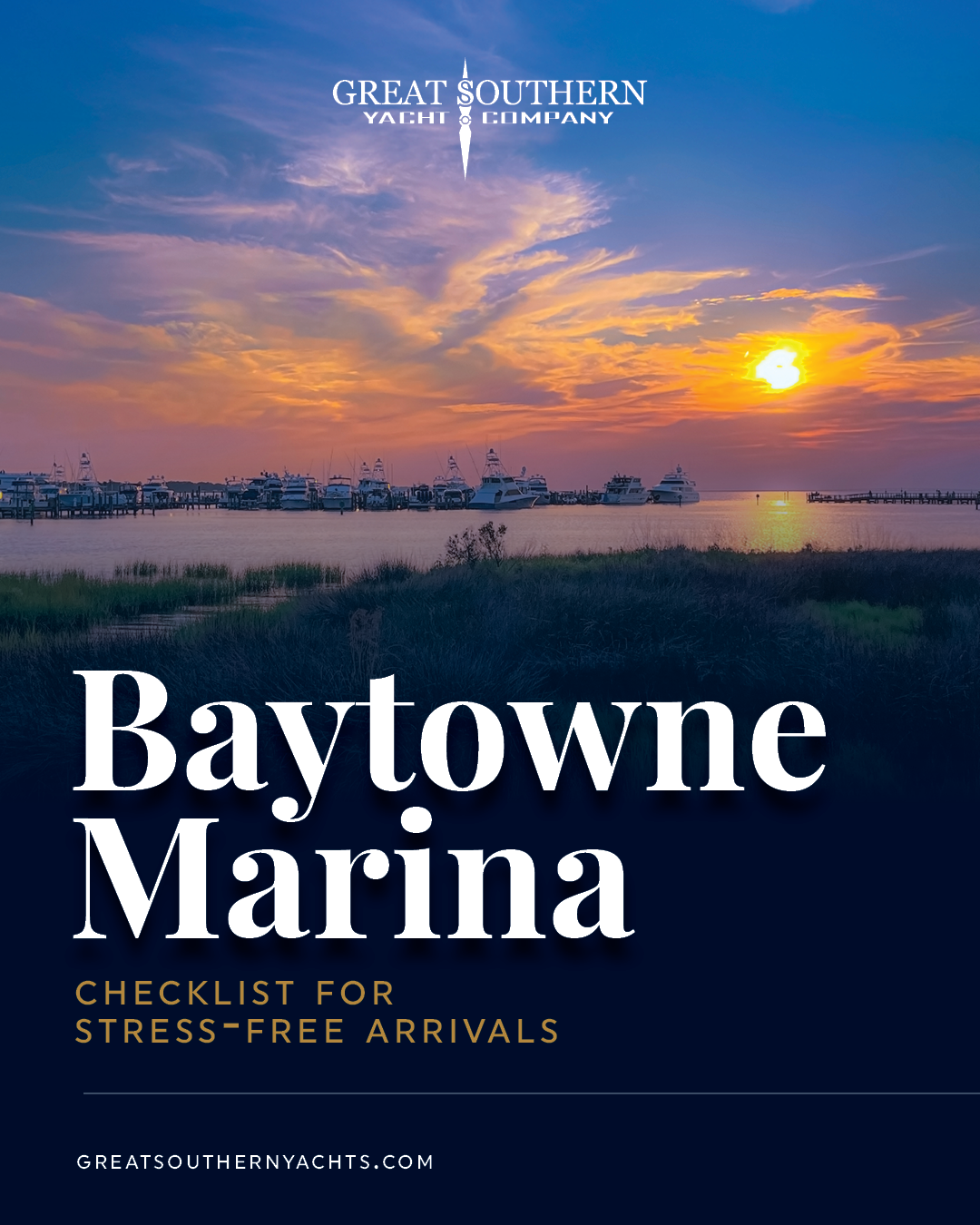
Imagine you’re docking at sunset in Baytowne Marina—here’s our calm checklist for stress-free arrivals
Imagine You’re Docking at Sunset in Baytowne Marina—Here’s a Calm Checklist for Stress‑Free Arrivals
A smooth arrival starts well before the dock lines land. Whether you’re easing a cruiser into a slip for dinner in the Village or wrapping up a Gulf run with the family, this calm, repeatable process will make sunset arrivals at Baytowne Marina in Sandestin feel effortless. Drawn from our work as private yacht consultants and licensed captains along Florida’s Emerald Coast, it’s built for real-world conditions in Choctawhatchee Bay.
10–20 Minutes Out: Set Up for Success
- Confirm your slip and approach plan. Hail Baytowne Marina on VHF, then switch to their working channel as directed. Note slip number, side-to, power requirements, and whether the berth is fixed or floating; set fenders accordingly.
- Check wind, current, and visibility. Evening bay breezes, pop-up showers, and sunset glare can all influence your angle and speed.
- Brief your crew. Assign roles (helm, bow, stern, spring line), agree on hand signals or headsets, and keep non-essential guests seated.
-
Prepare gear.
- Fenders at the beam and quarter; a roving fender in hand.
- Lines rigged both sides: bow, stern, and at least one spring line led outside rails.
- Boat hook accessible; spotlight/flashlight ready but avoid blinding others.
- Ready your systems. Test thrusters, verify neutral idle RPM, switch on navigation lights, and ensure the chartplotter/heading is dimmed for night vision.
Approach: Slow Is Professional
- Enter the no‑wake zone early and settle the boat. Keep speed just above steerage to reduce windage effects while maintaining control.
- Read the waterway. Look for markers, dock-end eddies, crab pots, paddlecraft, and charter traffic returning from Destin.
- Square up early. Line your vessel with the slip from distance so final corrections are small and slow.
- Communicate clearly. The helm makes all calls. Use short, calm commands. If a call is missed, reset rather than improvising under pressure.
The Docking Sequence: A Three‑Step Flow
- Position and Pause
- Stop the boat completely upwind/up-current of the slip, bow or stern aligned as planned.
- Use taps of throttle and brief thruster bursts; avoid long inputs.
- If the angle isn’t perfect, circle back—no drama.
- Land the Spring Line First
- Ease alongside at idle. The roving crew handles a midship spring to a forward or aft cleat as designated.
- With the spring made fast, gently nudge in-gear against it to bring the boat parallel and under control.
- Make It Secure and Clean
- Bow and stern lines next, then adjust the spring for fore‑and‑aft position.
- Cross stern lines if appropriate for the slip. Add breast lines if wind pipes through the fairway.
- Finalize fender placement at dock height (floaters change less; fixed docks may need extra coverage).
Pro tip: If a gust disrupts the plan, back out calmly, reset, and re-approach. A deliberate do‑over is the mark of a confident skipper.
After You’re Alongside: Quiet the Boat and the Day
-
Engines and Bilges
- Neutral, cool down period, then shut down.
- Quick bilge and engine room scan: no alarms, no leaks, seacocks per your vessel’s SOP.
-
Shore Services
- Shore power: match 30A/50A, verify polarity indicator, then energize onboard systems.
- Water: connect with a clean hose and pressure reducer if needed.
- Waste: note pump‑out hours for morning service.
-
Lines and Chafe
- Add chafe guards where the boat will work overnight.
- Leave a touch of slack for tide and wind shifts on the bay.
-
Safety and Courtesy
- Coil lines, stow trip hazards, secure the swim platform.
- Keep noise and lights respectful—sunset crowds and nearby slips appreciate it.
- Debrief in two minutes: what worked, what to adjust next time.
Sunset Factors Specific to the Emerald Coast
- Glare and silhouettes: The low western sun across Choctawhatchee Bay can wash out aids to navigation. Use polarized lenses and rely on shape and motion, not just screen brightness.
- Evening traffic: Expect returning fishing charters and small craft near dinner hour. Stand on until you can safely give way.
- Summer squalls: If a cell moves through, hold just outside the fairway or on a face dock until conditions settle. There’s no prize for rushing.
A Ready Kit for Stress‑Free Arrivals
Keep this compact kit handy in a cockpit locker:
- Four to six fenders plus one roving fender
- Six dock lines, including two long springs
- Soft shackles or short dock whips for fixed docks
- Headsets or a simple hand‑signal card for crew
- Flashlight/spotlight with dimmable setting
- 30A/50A adapters and an extra shore power cord
- Chafe gear and spare cleat lines
Why the System Matters
A calm, consistent docking routine protects your yacht, your crew, and your evening. It also builds muscle memory for the days that aren’t postcard‑perfect. This is how we approach every client interaction as well—clarity first, no surprises, and steady guidance from planning to tie‑up.
As a fiduciary, brand‑agnostic Florida yacht brokerage, Great Southern Yacht Company supports owners far beyond the transaction. Our licensed brokers and USCG Master Captains advise on marina and slippage considerations, national logistics, surveys, and sea trials, whether you’re a new owner along 30A or a seasoned cruiser based in South Florida. If you’re evaluating upgrades, planning a cross‑country delivery, or considering whether to buy a yacht in Florida—or asking how to sell my yacht with minimal disruption—we’re here with practical, experience‑driven answers.
Talk with a Trusted Advisor
Planning your next arrival to Baytowne—or your next yacht? Connect with Great Southern Yacht Company, your Destin and 30A yacht broker team. We provide private yacht consulting, buyer representation, and full contract‑to‑close management across the Emerald Coast, South Florida, and nationwide. Reach out for a candid conversation about your goals.