
Yacht
Brokerage
Refined
Strategic guidance for buyers and sellers who expect more.
View All Listings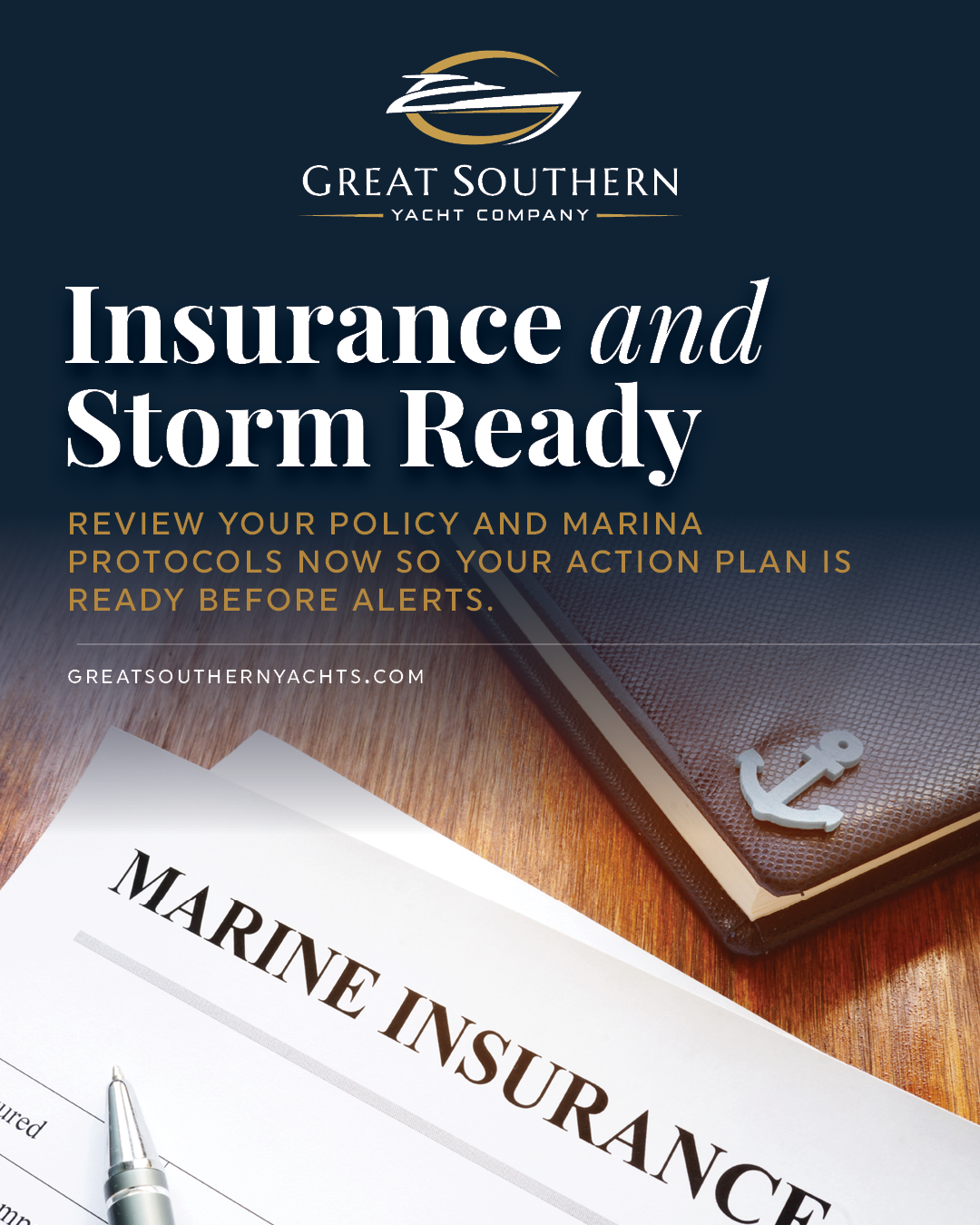
Review your insurance policy’s named-storm language today and create a step-by-step action list that satisfies those requirements and your marina’s protocols
Why Your Yacht’s Named-Storm Insurance Language Deserves a Fresh Look
In Florida and along the Gulf Coast, named storms aren’t an abstract risk — they’re a recurring part of yacht ownership. Yet many owners don’t revisit their insurance policies until a storm is already in the forecast. By then, it’s often too late to fix gaps, meet deadlines, or adjust your hurricane plan.
For yacht owners along the Emerald Coast, 30A, Destin, Sandestin, Miramar Beach, South Florida, and beyond, understanding your policy’s named-storm clause is as critical as checking the engines and lines. A calm, methodical review now can prevent coverage disputes later.
Below is a practical, step-by-step action list to help you:
- Interpret your policy’s named-storm requirements
- Align them with your marina’s hurricane protocols
- Build (and document) a storm plan your insurer will recognize
Step 1: Pull Your Policy and Locate the Named-Storm (or Hurricane) Clause
Start by gathering:
- Your full yacht insurance policy
- Any endorsements or riders (often where storm-related language sits)
- Your marina or yacht club hurricane plan and storage agreement
In the policy, look for sections labeled:
- “Named Storm Deductible”
- “Hurricane Plan” or “Hurricane Haul-Out”
- “Storm-Warning Requirements”
- “Lay-Up Warranty” or “Navigation Limits”
Highlight references to:
- Specific wind speeds
- NOAA advisories or “named storm” definitions
- Deadlines like “within 72 hours of a named storm watch”
If the language is unclear, make a note. You’ll circle back with your agent or broker for plain-English explanations.
Step 2: Clarify Where the Boat Must Be During a Named Storm
Many policies specify a required location or type of storage when a named storm approaches. Common requirements include:
- Haul-out at an approved yard
- Secured in a designated hurricane-rated slip
- Relocated to a protected basin or canal
- Moved outside of a defined “hurricane box” (geographic zone)
Your action items:
-
Write down exactly what your policy requires during a named storm.
-
Compare that to your marina contract and hurricane plan. Does your marina:
- Guarantee haul-out?
- Offer hurricane-rated dry storage?
- Have a waiting list or priority tiers?
-
If there’s a mismatch — for example, your policy expects haul-out but your marina doesn’t offer it — contact your insurance representative immediately to resolve the conflict.
Step 3: Understand the Deductible and Haul-Out Benefits
Named-storm deductibles are often higher than standard deductibles and may be expressed as a percentage of the vessel’s insured value.
Create a quick reference:
- Standard hull deductible: $__
- Named-storm/hurricane deductible: $__ or __% of value
Check for:
- Haul-out reimbursement: Some policies contribute toward haul-out, blocking, and relaunch if a named storm is forecast.
-
Conditions for reimbursement:
- How strong must the forecast be? (e.g., hurricane warning within a certain radius)
- What documentation is required (yard invoice, photos, forecast timelines)?
Knowing these details helps you decide, calmly and rationally, when hauling out makes sense financially and from a risk standpoint.
Step 4: Align With Your Marina’s Hurricane Protocols
Every marina along the Emerald Coast and South Florida has its own protocols. Obtain the latest written procedures and confirm:
- How they communicate storm plans (email, portal, texts)
-
Requirements for:
- Doubling lines
- Chafe gear
- Removing canvas, isinglass, and loose gear
- Disconnecting shore power and fuel shut-down
- Whether staff will adjust lines or if that is solely your responsibility
Your action list here:
-
Map your insurer’s requirements to your marina’s procedures.
-
Fill the gaps: If your insurer expects haul-out but your home marina won’t haul, identify:
- A secondary haul-out yard
- A captain or transport company who can move the yacht there
-
Document the agreed hurricane plan and keep copies with your ship’s papers and digital files.
Step 5: Create a Written Named-Storm Action Plan
Turn everything you’ve learned into a simple, repeatable checklist. A good named-storm plan for your yacht might include:
72–96 Hours Before Forecast Impact
- Confirm storm track and intensity from official sources
- Notify captain, crew, or yacht manager of potential activation of storm plan
- Contact your marina to verify haul-out or in-slip plan and timing
48–72 Hours Before
- Decide: haul-out, evacuate to an alternate port, or secure in slip
- Schedule haul-out or relocation if required by policy
- Photograph the vessel’s current condition above and below decks
24–48 Hours Before
- Strip canvas, loose cushions, and deck gear
- Secure tenders, PWCs, paddleboards, and toys
- Close seacocks as appropriate and check bilge pumps and batteries
- Double and cross-tie lines, add chafe protection, and set fenders correctly
Immediately After the Storm
- Prioritize personal safety first
- Once permitted, inspect the vessel or engage a local captain/agent
- Take date-stamped photos of any damage and surrounding conditions
- Notify your insurer per the policy’s claims instructions
Keep this plan printed onboard and accessible to family, captains, or anyone responsible for your yacht.
Step 6: Assign Responsibilities and Backup Support
Named storms don’t always respect your travel schedule. Decide in advance who can execute your plan if you’re not on the dock:
- Primary responsible party (owner, captain, local caretaker)
- Backup responsible party (neighboring slip holder, marina manager, service provider)
- Professional support (USCG-licensed captain, yacht management, or transport company)
Share:
- A copy of your insurance requirements
- The marina’s written hurricane plan
- Your personalized checklist and expectations
This level of clarity protects not only your yacht, but also the people you’re asking to help.
Step 7: Confirm Everything in Writing With Your Insurer and Marina
To close the loop:
- Email your insurance broker/agent with your planned storm procedures.
- Ask them to confirm that your hurricane plan meets the policy’s named-storm requirements.
-
Request written confirmation from your marina regarding:
- Your assigned slip or haul-out priority
- Their expectations of you before and after storms
File these confirmations with your policy documents. In a dispute scenario, contemporaneous notes and emails can be invaluable.
Navigating Named-Storm Risk With a Trusted Advisor
The best time to align your insurance policy, named-storm language, and marina protocols is long before the first forecast cone appears on your screen. A clear, documented plan reduces stress and helps preserve both your asset and your coverage.
If you’re considering buying or selling a yacht in Florida or nationwide and want guidance that accounts for real-world storm and logistics risk, Great Southern Yacht Company is here to help. As private yacht consultants and fiduciary-focused brokers, we routinely help clients think through insurance, marina selection, and long-distance ownership realities — not just the sale itself.
To discuss your next yacht purchase or sale with an experienced Destin- and 30A-based yacht broker who understands storm season from the dock up, contact Great Southern Yacht Company today.