
Yacht
Brokerage
Refined
Strategic guidance for buyers and sellers who expect more.
View All Listings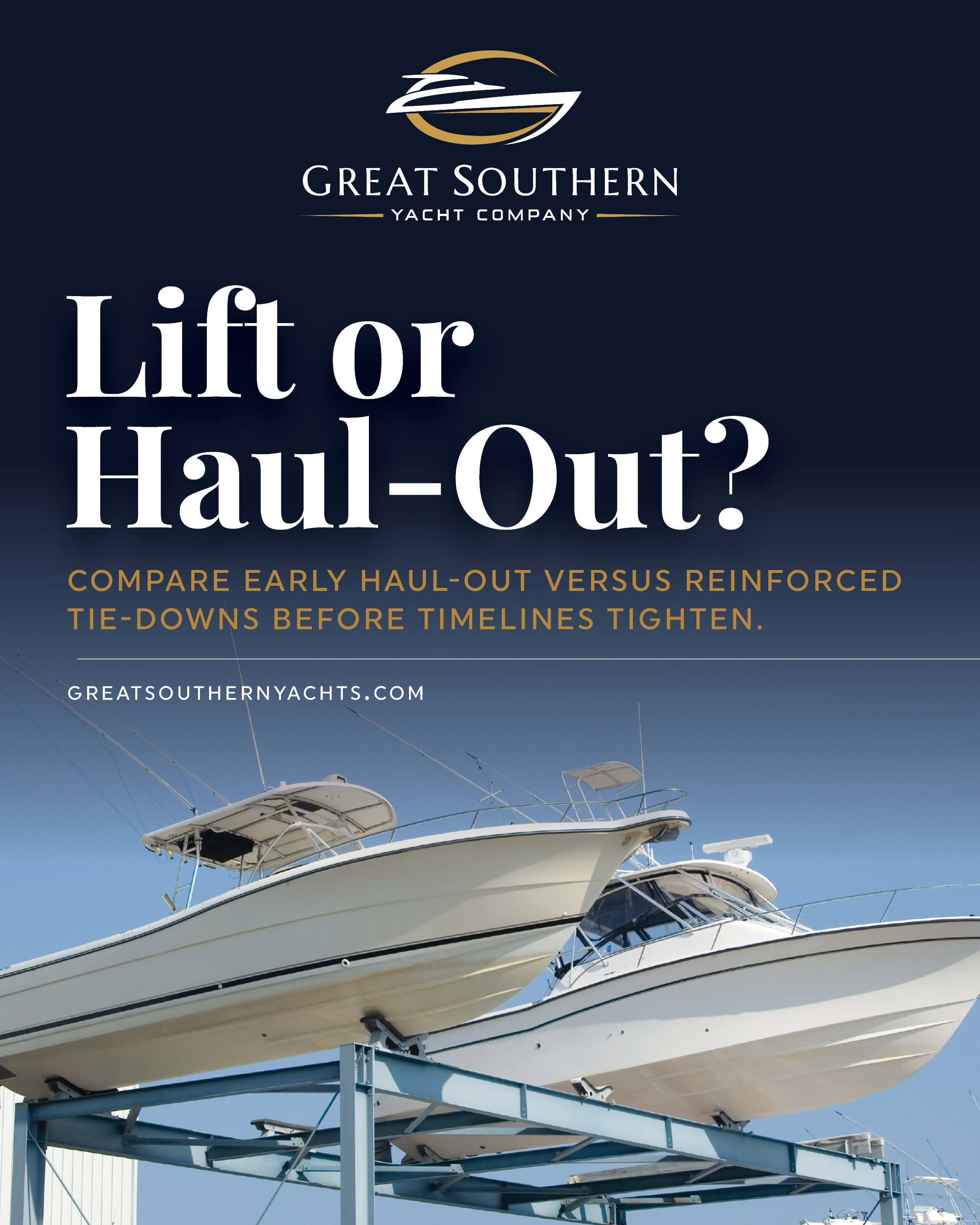
If your yacht is kept on a lift in Destin or 30A, compare the pros and cons of early haul-out versus reinforced tie-downs now, before named storms compress timelines
Early Haul-Out vs. Reinforced Tie-Downs for Lift-Kept Yachts in Destin & 30A
For many owners along Florida’s Emerald Coast, a yacht lift in Destin, Sandestin, Miramar Beach, or 30A is the ideal everyday solution. It keeps your boat clean, secure, and ready to go. But as soon as the tropics start to wake up, that same lift becomes a strategic decision point:
Do you haul your yacht early, or reinforce and ride out the storm on the lift?
This decision is far easier to make before a named storm compresses haul-out schedules, transport availability, and marina space. Below is a practical, side‑by‑side look at the pros and cons of each approach so you can plan with confidence.
Why Timing Matters on the Emerald Coast
Once the National Hurricane Center starts assigning names, everything tightens:
- Shipyards and marinas fill up fast for haul-outs and dry storage
- Transport operators and captains book out for short-notice moves
- Lift service crews and dock contractors get overwhelmed with last-minute calls
If your yacht is on a lift in Destin or along 30A, planning now—before a named storm is on your screen—gives you more options, better pricing, and safer outcomes.
Option 1: Early Haul-Out
Hauling your yacht well in advance of a named storm means moving it off the lift and into a more controlled environment—typically a yard, hurricane-rated dry storage, or a protected facility inland.
Advantages of Early Haul-Out
1. Reduced structural risk to your lift and dock
The heaviest storm damage for lift-kept yachts often isn’t to the boat—it’s to the lift and pilings.
By moving the yacht off:
- You remove thousands of pounds from the lift structure
- You reduce leverage on pilings in surge and wave action
- You minimize the risk of the lift failing and dropping the yacht
For many Destin and 30A waterfront properties, the dock and lift are harder and more expensive to replace than the boat’s cosmetic damage.
2. More controlled environment
A properly blocked and secured yacht on the hard has:
- Less exposure to floating debris
- No reliance on shore power, cables, or lift motors
- Clear visibility for post-storm inspection and insurance documentation
Yard staff are accustomed to hurricane procedures; they know how to secure vessels, remove or strap down towers, and manage lines and chocks.
3. Insurance and underwriter comfort
Many underwriters view proactive haul-out as a positive risk management step. For some high-value yachts and megayachts, policies may:
- Recommend or require haul-out above certain wind thresholds
- Offer specific hurricane plans or credits for documented preparation
Checking this now with your yacht insurance and Florida yacht broker avoids last-minute uncertainty.
4. Improved logistics flexibility
When you schedule early, you can:
- Select your preferred yard or marina, not just what’s left
- Arrange transport to a safer region if needed
- Coordinate captain services, crew, and post-storm re-launch on your timeline
Once storm watches are issued, you’re working on everyone else’s schedule.
Drawbacks of Early Haul-Out
1. Upfront cost and downtime
Haul-outs involve:
- Haul and block fees
- Storage charges (short- or long-term)
- Potentially additional transport or captain fees
If you enjoy frequent weekend use in Destin, Sandestin, or along 30A, early haul-out means losing that flexibility for part of the season.
2. Weather uncertainty
Not every storm makes landfall as predicted. You may invest in a haul-out for a storm that ultimately veers away or weakens. That trade-off is part of a conservative risk posture.
3. Yard capacity and access
Hauling out only works if:
- You have a yard or marina that can handle your yacht’s length, draft, and beam
- There’s capacity during peak hurricane season
- The location is realistically accessible from your current marina or lift
Planning these details now with a Destin or 30A yacht broker or captain avoids discovering limitations when a storm is already named.
Option 2: Reinforced Tie-Downs on the Lift
The alternative is to leave the boat on the lift and substantially reinforce how she’s secured. For some owners and certain properties, this is a practical middle ground—especially for smaller center consoles, bay boats, and moderate-size cruisers.
Advantages of Reinforced Tie-Downs
1. Immediate availability post-storm
Your yacht remains:
- In its usual slip, on its usual lift
- Ready for inspection, light cleanup, and a sea trial once conditions are safe
For local owners who want rapid post-storm mobility, this can be appealing.
2. Lower upfront cost vs. haul-out
Reinforcing tie-downs generally involves:
- Additional mooring lines, chafe protection, and tie-down straps
- Cleat and piling inspections or upgrades
- Possible professional consultation on storm prep
For many boats, this costs less than haul and storage, especially if you already maintain a robust tie-down system.
3. Practical for specific boat and lift setups
For certain configurations:
- Smaller, lighter vessels on overbuilt lifts
- Lifts far inside protected canals or bayous
- Properties with serious piling, dock, and bulkhead engineering
A reinforced, well-considered tie-down plan can be appropriate, particularly for weaker forecast systems.
Drawbacks of Reinforced Tie-Downs
1. Exposure to surge and structural failure
Even with careful preparation, leaving a yacht on the lift exposes you to:
- Storm surge that can push the hull above safe cradle heights
- Wave action that oscillates the lift and strains pilings
- Debris impact from neighbors’ docks, jetskis, and loose objects
If the lift fails under load, damage to both yacht and dock can be catastrophic.
2. Dependence on local infrastructure
You’re relying on:
- Your home’s power (and any backup) to hold lift position before you manually secure it
- The integrity of local seawalls and bulkheads
- Neighboring docks and boats being reasonably prepared
These variables are rarely fully within your control.
3. Insurance and policy questions
Some policies may:
- Expect “reasonable steps” to protect high-value assets
- Scrutinize lift failures more closely than yard-secured vessels
Clarifying what your underwriter expects from a Florida yacht owner before storm season is important.
How to Decide: A Practical Framework
For lift-kept yachts in Destin, Miramar Beach, or 30A, there’s no one-size-fits-all answer. Consider:
-
Vessel size and type
- Larger yachts, sportfishing vessels, and trawlers often warrant haul-out
- Smaller, lighter boats with robust lifts may justify reinforced tie-downs
-
Lift and dock engineering
- Age, capacity margins, piling depth, and exposure to open water
- Whether the system was designed with storm loads in mind
-
Property location
- Protected bayou vs. open bay or Gulf-facing canal
- Historical surge patterns and fetch (distance wind can push water)
-
Insurance and financing requirements
- Stated hurricane plans, deductibles, and compliance expectations
-
Personal risk tolerance and usage needs
- How often you use the boat in peak season
- Your comfort level with potential downtime vs. potential damage
Early conversations with a knowledgeable Destin yacht broker or private yacht consultant help align these factors with real-world options—yards, marinas, captains, and transport providers you can actually call on when needed.
Plan Now, Before the Names Start
The safest, most cost-effective storm strategy is almost always the one you plan before the forecast turns red.
If you’d like an experienced, fiduciary yacht advisor to review your lift setup, discuss haul-out options, or build a practical hurricane plan tailored to your yacht and property, Great Southern Yacht Company is here to help.
Contact our team to start a quiet, no-pressure conversation about protecting your yacht along the Emerald Coast and beyond.