
Yacht
Brokerage
Refined
Strategic guidance for buyers and sellers who expect more.
View All Listings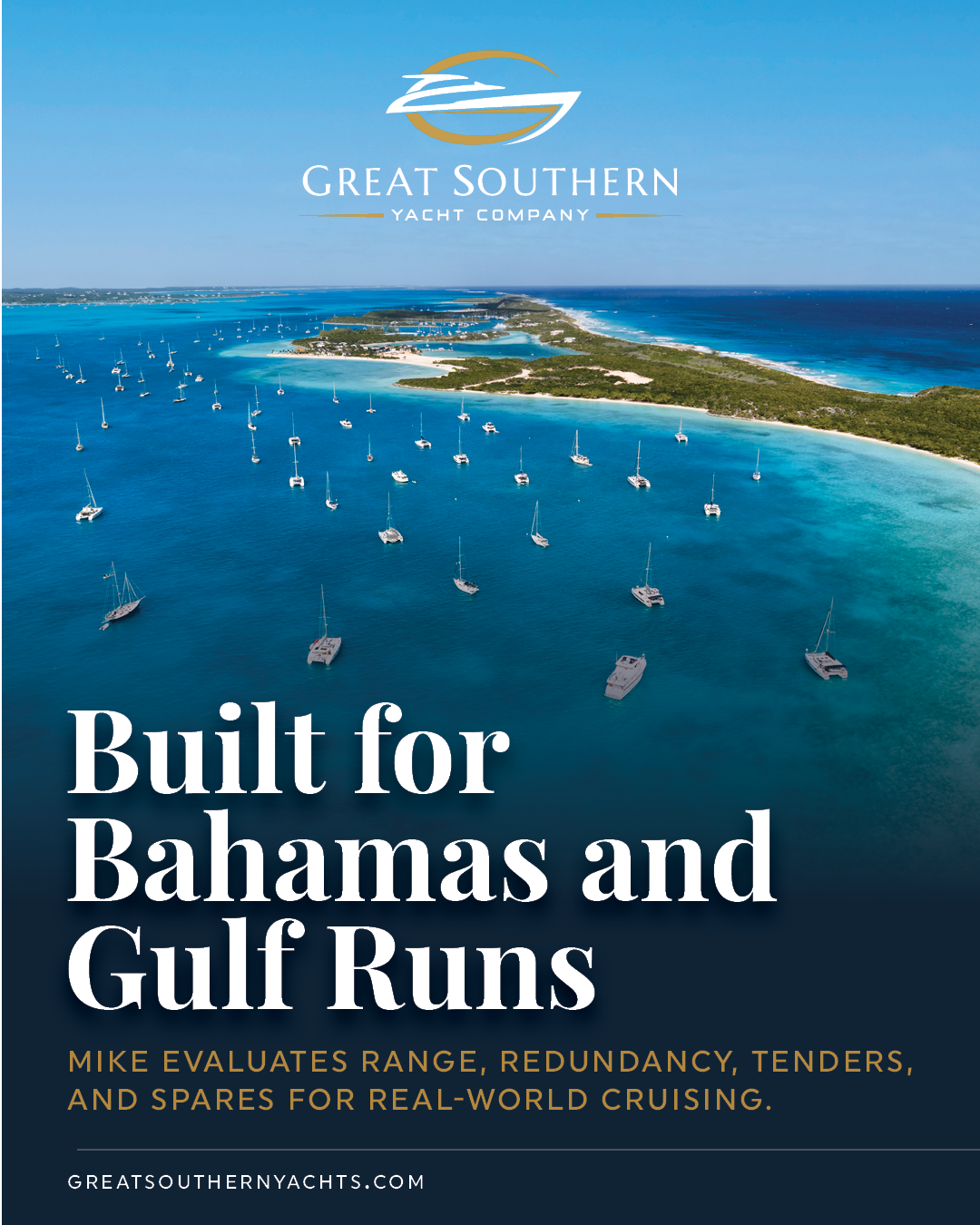
Bahamas or Gulf Coast runs in your plan: how Mike evaluates range, redundancy, tender strategy, and spares to match real cruising profiles—not brochure ranges; learn more on our website
Bahamas or Gulf Coast Runs: How Mike Matches Real-World Range, Redundancy, Tenders, and Spares to Your Cruising Profile
When clients plan Bahamas crossings or extended Gulf Coast runs, brochure range numbers rarely tell the full story. Conditions, loading, crew, and actual use patterns define what a yacht can comfortably and safely do. At Great Southern Yacht Company, our broker Mike builds purchase recommendations around the way you intend to cruise—not the way a spec sheet imagines it.
Below is the framework Mike uses to align yacht capability with Bahamas and Gulf itineraries, then verify it during showings, surveys, and sea trials.
Start With Your Real Cruising Profile
Before looking at propulsion or tankage, Mike clarifies how you’ll actually use the boat. Typical profiles include:
- Bahamas island-hopping: 40–120 nm legs, frequent anchoring, shallow-draft and tender-heavy life.
- Emerald Coast and 30A weekends: short hops, in-and-out of inlets, sandbar time, family gear.
- Gulf Coast repositioning: longer, weather-dependent legs (e.g., Panhandle to Tampa or South Florida).
- Sportfishing campaigns: unpredictable ranges, high idle time, quick turns, generator-heavy loads.
- Seasonal moves: cross-country shipping or deliveries with different fuel and marina availability.
Each pattern sets different priorities for speed vs. economy, tank capacity, tender strategy, and spares.
Why Brochure Range Falls Short
Manufacturer range assumes ideal conditions—clean bottom, light load, flat seas, and perfect trims. Real cruising adds friction:
- Heavier load from water, provisions, toys, and guests
- Sea state and wind-on-the-nose penalties
- Generator and hotel loads (stabilizers, air, electronics)
- Bottom growth between services
- Routing that avoids weather or shoals
Mike derates brochure range with a conservative buffer, then confirms the numbers on sea trial at your anticipated speed and loading.
How Mike Calculates Real-World Range
Range confidence comes from disciplined assumptions and verification:
- Fuel burn curves at multiple RPMs: Compare surveyor-verified engine data to published curves.
- Proper reserve policy: Maintain an appropriate reserve for open-water legs (e.g., 20–30% depending on route and season).
- Sea state and wind factors: Apply a margin for common Gulf and Stream conditions, not just flat-water tests.
- Load and trim: Evaluate range with full fluids, tender aboard, safety gear, and typical luggage.
- Generator and hotel loads: Add realistic hourly fuel use for stabilized, air-conditioned passages.
- Stabilizer impact: Note whether fin or gyro stabilization changes drag and generator run-time.
For Bahamas trips, Mike models routing from South Florida to West End, Nassau, and the Exumas with conservative reserves and bailout options. For Gulf Coast runs, he evaluates legs that cross big bites like Apalachee Bay and stretches between reliable fuel docks.
Redundancy: Critical Systems That Shouldn’t Be Single-Point
The right redundancy plan reduces drama when conditions change:
- Propulsion: Twin engines or, on single-screw trawlers, get-home capability (wing engine or yacht-towing plan that’s actually feasible).
- Fuel: Dual racor setups with vacuum gauges, spare primaries/secondaries, and polished fuel prior to long runs.
- Electrical: Multiple charging sources (alternator, genset, inverter/charger), parallel battery banks, essential spares for regulators and belts.
- Navigation/comm: Independent plotter or tablet with offline charts, AIS, handheld VHF, and a satellite communicator for weather and check-ins.
- Steering and stabilization: Spare hydraulic fluid, ram seals, and backup steering method where applicable.
Mike maps redundancy to your routes: shoal-prone Bahamas legs prioritize fuel filtration and tender autonomy; Gulf passages emphasize electrical resilience and weather comms.
Tender Strategy for Bahamas and the Gulf
A well-matched tender expands your range, access, and safety:
-
Purpose and hull choice:
- Bahamas: shallow-draft RIB or lightweight center-console tender for beaches and cuts.
- Gulf Coast: stable, slightly larger tender for inlet chop and family loads.
- Storage and launch: Davit capacity, deck chocks, or garage dimensions must match tender weight and beam—verified during showings.
- Fuel plan: Separate tender fuel management, spare jerry cans, and safe transfer gear; ethanol-free availability varies by region.
- Outboard reliability: Carry prop, plugs, impeller, fuel filters, and a modest toolkit.
- Safety and comms: VHF handhelds, anchor, proper nav lights, and a simple tow bridle.
Mike checks real weights and clearances, not just model names, to prevent surprises at delivery.
Smart Spares: What to Carry for Confidence
For Bahamas and Gulf itineraries, spares reduce downtime and reliance on scarce parts:
- Engine and genset: Belts, impellers, filters (oil/fuel/air), zincs, key sensors, spare fluids.
- Fuel system: Extra Racor elements, o-rings, biocide, and a clean transfer pump.
- Electrical: Fuses, relays, bulbs, nav light spares, spare VHF mic, charging cables.
- Plumbing: Pump rebuild kits, macerator spares, hose clamps, sanitary hose segments.
- Deck: Windlass switch and solenoid, anchor swivel, spare shackle, dock line and chafe gear.
- Tools and consumables: Quality toolkit, headlamp, multimeter, heat-shrink, sealants, and tapes.
- Documentation: Up-to-date digital manuals and laminated quick-start checklists.
Mike also considers parts availability by destination; what’s easy in South Florida may be a multi-week wait in the Out Islands.
Verifying It All During Due Diligence
As a fiduciary, brand-agnostic Florida yacht brokerage, Great Southern tests plans against reality:
- Showings with intent: Measure real spaces for tender stowage and spares, confirm davit ratings, and inspect service access.
- Sea trials that mirror use: Load crews and gear, run at intended cruise, verify burn rates, stabilize in representative seas when possible.
- Surveys with operational focus: Engines, generators, electrical, fuel systems, and steering/stabilization checked against your redundancy goals.
- Contract-to-close coordination: Logistics for long-distance transport, regional or cross-country deliveries, documentation, and insurance.
- Marina and slippage advisory: Plan draft, beam, power, and height against actual slips from Destin and 30A to South Florida and the Bahamas.
This private yacht consulting approach ensures your yacht supports how you live aboard—whether you work with our Destin yacht broker team, a 30A yacht broker, or remotely with clients nationwide.
A Calm, Clear Path to the Right Yacht
Mike’s process is simple: define the cruise, derate the promises, build redundancy, right-size the tender, and carry the spares that keep you moving. It’s how our clients avoid guesswork—and why many return to buy and sell with us as their long-term advisor.
If Bahamas crossings or Gulf Coast runs are in your plan, let’s align your next yacht to your real cruising profile. Contact Great Southern Yacht Company to start a confidential consultation with a fiduciary-first broker.