
Yacht
Brokerage
Refined
Strategic guidance for buyers and sellers who expect more.
View All Listings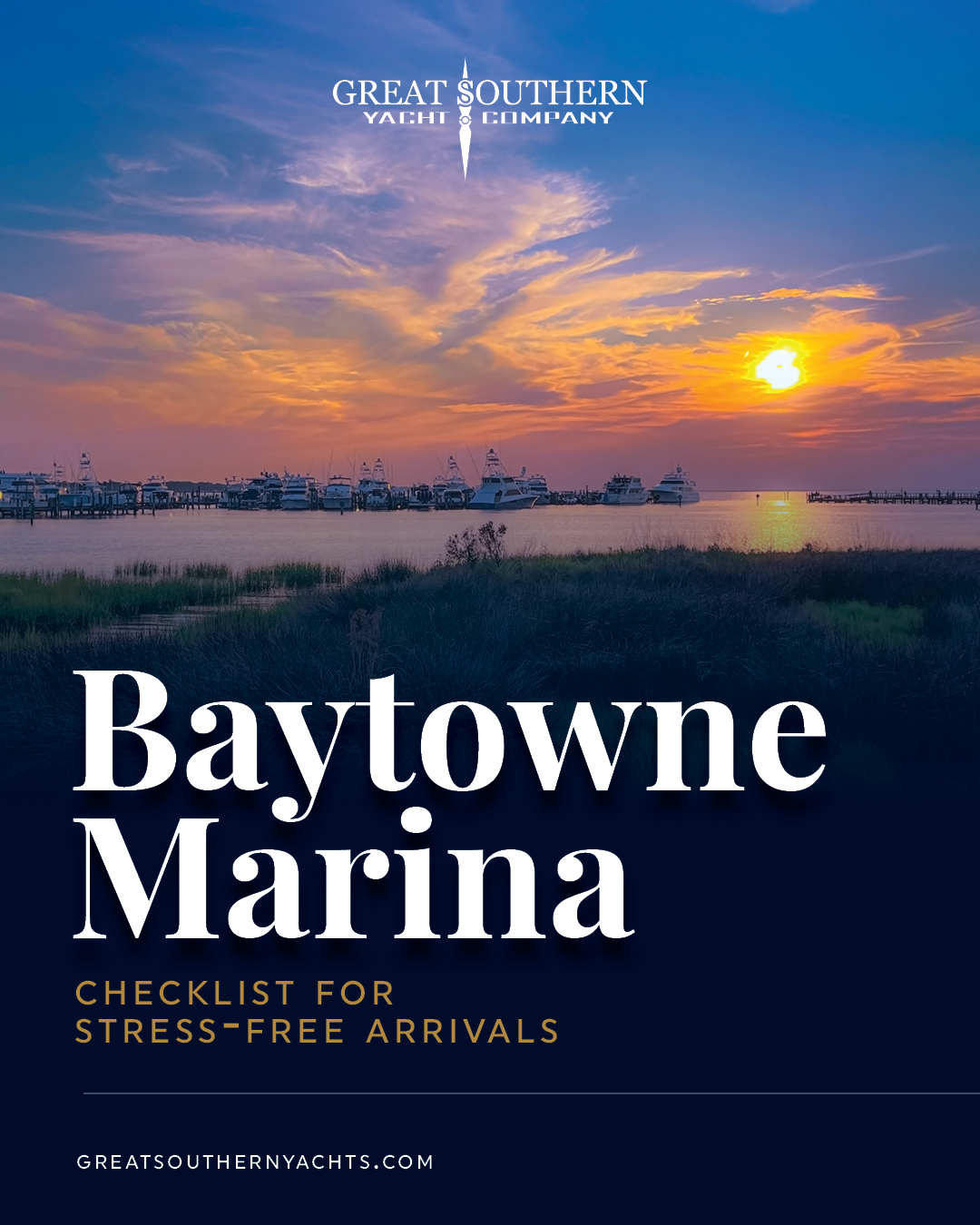
Imagine you’re docking at sunset in Baytowne Marina—here’s our calm checklist for stress-free arrivals
Docking At Sunset In Baytowne Marina: A Calm, Stress‑Free Arrival Checklist
Sliding into Baytowne Marina at sunset can be one of the best moments of your time on Florida’s Emerald Coast—if you arrive prepared. Whether you’re coming into Sandestin from a day offshore, cruising over from Destin or 30A, or completing a longer Gulf Coast passage, a simple, repeatable docking routine turns “white‑knuckle” into “no problem.”
This calm checklist reflects how professional captains and experienced owners think through their approach. Adapt it to your yacht, your crew, and your typical destinations along the Emerald Coast and beyond.
1. Start Your Approach Before You See The Marina
A smooth docking starts miles out, not at the seawall.
Check conditions early
- Review the latest weather, wind direction, and strength
- Confirm tide stage and current set/drift for Choctawhatchee Bay
- Note sunset timing and remaining daylight
Wind and current will matter more than almost anything when you’re landing at Baytowne or other marinas in Destin, Miramar Beach, or 30A. Knowing what you’re working with helps you plan your angle and speed well in advance.
Prepare the boat, not just the crew
- Secure loose items on deck
- Power up thrusters and electronics; check steering responses
- Confirm VHF working and volume set appropriately
- Turn on navigation and deck lighting—without blinding nearby vessels
Think of this as your “flight checks” before entering the pattern.
2. Call Ahead And Confirm Your Slip
Marina communication is your first line of stress reduction.
Reach out 20–30 minutes prior to arrival
- Hail Baytowne Marina on VHF (or use the phone if preferred)
- Confirm slip assignment, side‑to, and any last‑minute changes
- Ask about depth, current, and any obstructions or construction
Questions to ask that many newer owners overlook:
- “What’s the best way to come into this slip in today’s wind?”
- “Any tight turns or shallow spots I should be aware of?”
- “Port or starboard tie? Cleat layout?”
Marina teams on the Emerald Coast handle a wide range of yachts—cruisers, sportfish, trawlers, sailboats, and megayachts. They know what works on a busy evening and can give you simple, practical guidance.
3. Brief Your Crew Before You Enter The Marina
A calm dockside experience is built on quiet, clear communication—not shouting over engines as you approach the slip.
Hold a two‑minute briefing
- Explain the docking plan (approach angle, which side to the dock, final orientation)
- Assign each person a clear job: bow line, stern line, spring line, or fender watch
- Demonstrate safe hand and foot placement; no one should “fend off” with arms or legs
If you have new guests aboard:
- Ask them to stay seated and out of the working areas
- Remind them to keep questions and commentary to a minimum during the landing
A short, confident briefing is one of the biggest differences between a relaxed arrival and a flustered one.
4. Set Lines And Fenders With Intention
Doing this early means no last‑second scrambling as you come alongside.
Rig fenders for the slip you’re actually using
- Set fenders at appropriate heights for Baytowne’s docks and tide state
- Place extra fenders at points of potential contact—bow flare or stern corners
- Keep one “roaming” fender handy for a crew member to adjust as you land
Pre‑run lines wherever possible
- Bow and stern lines pre‑tied on the correct cleats
- At least one spring line ready to capture the boat and control forward/aft movement
- Bitter ends led outside railings and lifelines—no snags or surprises
Pro captains on luxury yachts and sportfishing vessels rely heavily on spring lines; a single well‑placed spring can do more work than three people pushing.
5. Slow Down And Read The Environment
Inside any marina—from Baytowne to Miami and Fort Lauderdale—situational awareness is your best docking tool.
As you enter the basin:
- Reduce speed to bare steerageway; let rudders and thrusters work for you
- Note any crosswind corridors between fixed structures
- Watch for small craft, paddleboards, and transient boats moving unpredictably
- Identify your escape route if the approach doesn’t feel right
If you’re unsure, make a slow circle outside the slip fairway to observe wind and current on your hull. There is no penalty for taking an extra minute to understand what the boat is doing.
6. Execute A Quiet, Deliberate Landing
At this stage, less is often more.
Use short, decisive inputs
- Make small throttle and gear changes; avoid long bursts
- Use thrusters in taps, not long pushes, to prevent over‑correction
- Keep your eyes on your reference points: pilings, dock corners, and your target cleats
Keep communication calm and simple
- Use short phrases: “Neutral,” “Stern line on,” “Spring made,” “All stop”
- Confirm line status back and forth until you’re fully secure
- Avoid yelling—if you can’t be heard at normal volume, invest in headsets
Remember: if the approach starts to unravel, back out early and try again. A reset is always better than forcing a bad angle in tight quarters.
7. Secure The Yacht For The Night
Once the lines are on, take an extra five minutes to think like a long‑term owner, not just an arriving skipper.
Check lines, chafe, and fenders
- Adjust line lengths for tide, especially in areas with significant range
- Add chafe gear where lines ride over rough edges
- Confirm fenders are bearing weight properly and won’t pop out overnight
Complete your onboard shutdown
- Shore power connected, polarity checked, and loads managed
- Systems set as needed: chargers on, refrigeration secure, unnecessary loads off
- Hatches and ports secured according to forecast wind and rain
This is also a good time to recheck weather—particularly on the Gulf Coast, where conditions can change quickly overnight.
8. Debrief While The Experience Is Fresh
The most capable captains and experienced yacht owners constantly refine their process.
After you’re tied up and relaxed:
- Ask your crew what felt smooth and what felt rushed
- Note any gear you wished you had (extra fender, longer line, headsets)
- Record wind, current, and slip orientation in a simple log
This kind of quiet reflection, especially when repeated at your regular marinas in Destin, Sandestin, Miramar Beach, 30A, and South Florida, builds confidence that carries into bigger trips and larger yachts.
Considering Your Next Step In Yacht Ownership?
If you’re thinking about upgrading, downsizing, or purchasing a yacht better suited to the way you actually cruise—whether around Baytowne Marina or across the country—a private conversation with an experienced, fiduciary‑minded yacht broker can be invaluable.
Great Southern Yacht Company provides calm, clear guidance for buyers and sellers along Florida’s Emerald Coast, South Florida, and nationwide. If you’d like to discuss your plans, your current vessel, or the right next yacht for the way you boat, we’re here to help you move forward with clarity and confidence.