
Yacht
Brokerage
Refined
Strategic guidance for buyers and sellers who expect more.
View All Listings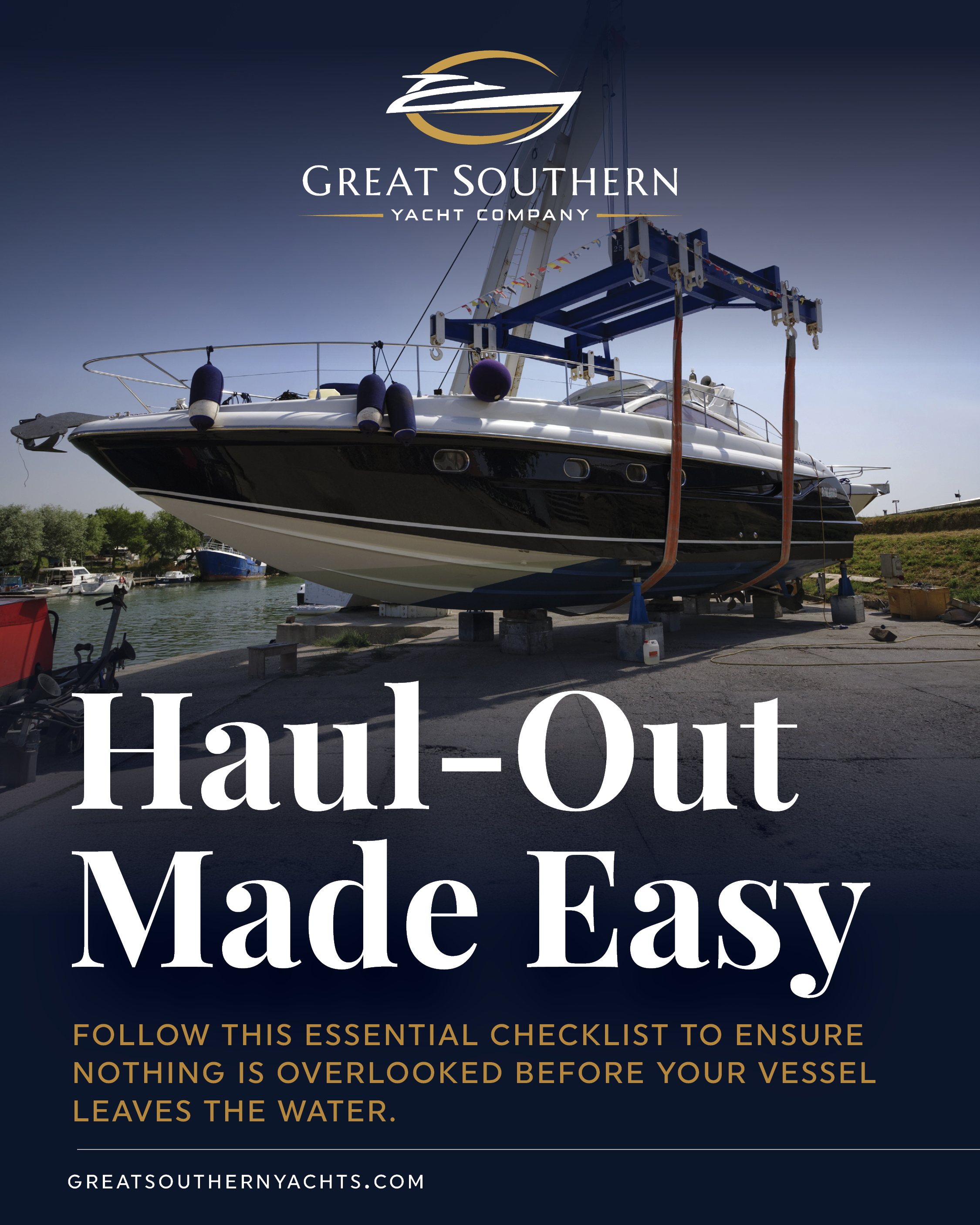
Haul-out readiness checklist for sportfish, trawlers, and cruisers: sling placement notes, thru-hull tagging, battery shut-down plans, and who to brief at the yard so nothing is missed under pressure
Haul-Out Readiness Checklist for Sportfish, Trawlers, and Cruisers
A haul-out is one of the most critical maintenance moments in a yacht’s life. Whether you run a classic trawler, a high-performance sportfish, or a family cruiser, proper preparation protects your vessel and reduces costly surprises at the yard.
From our work with clients across Florida’s Emerald Coast and South Florida, we see the same pattern: the best haul-outs are the ones planned in advance. Use this checklist to organize sling placement, thru-hull tagging, electrical and battery shut-down, and clear communication with the yard team—so nothing is missed when the travel lift is waiting and everyone is under pressure.
1. Before You Schedule: Clarify the Scope of Work
Before talking details with the yard, define exactly why you are hauling:
- Bottom paint only?
- Running gear inspection (shafts, props, struts, rudders)?
- Thru-hull and seacock service or replacement?
- Hull survey for a sale or insurance?
- Stabilizer, bow thruster, or trim tab maintenance?
- Gelcoat or topside work that requires extended time out of the water?
Clarify:
- Required timeline (in and out same day vs. yard time on the hard)
- Whether a surveyor, mechanic, or electrician will be onsite
- Any special instructions for sportfish towers, outriggers, or heavy tenders
Having this defined upfront helps the yard assign the right lift, blocking, and technicians—and gives you a shared game plan.
2. Sling Placement: Protecting Hull, Gear, and Running Surfaces
Incorrect sling placement is one of the easiest ways to damage a sportfish, trawler, or cruiser during haul-out. Take the time to make sling locations obvious and discuss them with the lift operator before the boat is in the well.
a. Confirm Sleeve and Lift Capacity
- Verify the travel lift’s weight rating, beam capacity, and strap width fit your vessel.
- Share your LOA, beam, draft, and displacement with the yard ahead of time.
b. Mark Sling Locations Clearly
Use hull markings and your own notes:
- Identify manufacturer-recommended sling points (usually shown on the hull sides or in the owner’s manual).
- Consider prop pockets, shafts, struts, stabilizer fins, transducers, and thru-hulls when locating straps.
- Use removable tape or chalk lines at deck level to show yard personnel where slings can sit safely.
For sportfish and planing cruisers:
- Keep slings away from prop tunnels and trim tabs.
- Confirm that running gear and rudders have ample clearance before lifting.
For trawlers and full-displacement hulls:
- Watch for stabilizer fins, keel coolers, and deep keel shapes that change sling placement.
- If possible, have photos from prior haul-outs to guide new yard teams.
3. Thru-Hull Tagging: Know What’s What Before You’re Dry
The haul-out yard is not the place to discover you don’t know which seacock feeds your generator or air conditioning.
a. Inventory Every Thru-Hull and Seacock
Walk the boat and list:
- Raw water intakes (mains, generators, air conditioning, water makers)
- Discharges (bilge pumps, sinks, showers, heads, air conditioning)
- Transducers and sensors
- Cockpit and deck drains
- Any older or unknown penetrations
b. Tag and Label Clearly
Use durable, water-resistant tags or labels:
- Number each thru-hull and match it to a simple legend (e.g., #1: Port engine intake; #2: Starboard engine intake).
- Mark “DO NOT CLOSE” or “LEAVE OPEN” where necessary, especially on systems needing flow for testing.
- Clarify which valves can be safely exercised during yard work and which should not be touched without your approval.
Provide a copy of this legend to:
- The yard manager
- Your primary technician or surveyor
- Anyone overseeing systems work while the boat is hauled
4. Battery and Electrical Shutdown: A Safe, Repeatable Plan
A written battery and power plan prevents confusion while the boat is on the hard and avoids dead batteries, damaged systems, or unsafe conditions.
a. Map Your Electrical System
Know:
- Location of main battery switches (engines, house, generators, thrusters, windlass)
- Shore power inlets and breaker panel layout
- Any dedicated battery banks for electronics, bow/stern thrusters, or inverters
b. Define Your Shutdown Sequence
Create a simple checklist, for example:
- Turn off all non-essential AC loads at the panel.
- Shut down chargers, water heater, HVAC if not needed.
- Power down electronics and helm systems.
- Turn off engine and generator battery switches (unless required for yard work).
-
Confirm bilge pumps have a clear power path:
- If pumps are wired direct to the battery: keep those circuits live.
- If not, discuss temporary arrangements with the yard for safety.
c. Shore Power and Onboard Access
- Decide whether you will leave shore power connected to maintain battery charging and dehumidifiers.
- Label critical breakers: “LEAVE ON – BILGE PUMPS” or “OK TO TURN OFF.”
- Let the yard know any passwords or specific steps required to energize or shut down systems (for example, digital switching systems on late-model cruisers).
Put this plan in writing and hand it to the yard office, taped to the inside of the main panel door, or both.
5. Who to Brief at the Yard—and What to Cover
The biggest source of mistakes during haul-outs is unclear communication. Decide who is in charge of your boat on the hard and brief them before the travel lift is running.
a. Key People to Speak With
-
Yard manager or haul-out coordinator
Primary point of contact for lift, blocking, and scheduling. -
Lead technician or service manager
Person overseeing engines, running gear, thru-hulls, and electrical. -
Lift operator / travel lift crew
The team actually putting slings under your hull. -
Surveyor or captain (if involved)
If you’re buying, selling, or using a captain, ensure they are looped into all instructions.
b. Topics to Cover in the Briefing
Use a printed “haul-out briefing sheet” and walk through it:
- Sling placement notes and no-lift zones
- Any sensitive gear (stabilizers, underwater lights, transducers)
- Blocking preferences (under keel, stringers, or reinforced hull locations)
- Thru-hull labeling and which valves can be operated
- Battery and electrical shutdown plan
- Required work list and priorities (for example, “Survey first, then bottom paint”)
- Who may authorize change orders or additional work, and how to reach you
Encourage the yard to call if anything is unclear. A five-minute conversation can prevent a five-figure mistake.
6. Day-of-Haul Checklist: Final Prep Before Entering the Well
On the morning of haul-out:
- Remove or secure loose items on deck and in the cockpit.
- Stow outriggers, antennas, bimini tops, and any removable electronics.
- Reduce fuel and water weight if practical and safe.
- Ensure fenders and lines are ready for precise positioning in the well.
- Have your haul-out notes in hand and review them quickly with the lift crew.
Once the boat is in the slings but still in the water, ask the operator to pause briefly:
- Check strap positions against your markings.
- Confirm nothing is touching shafts, fins, or transducers.
- Take photos for your records.
Making Haul-Outs Routine Instead of Stressful
A well-prepared haul-out protects your investment and gives your captain, surveyor, and yard team the conditions they need to do their best work. For owners along Florida’s Emerald Coast, 30A, Destin, Miramar Beach, and South Florida, this planning is especially important as seasonal demand can put yards under time pressure.
If you’d like advisory support as part of buying, selling, or surveying a yacht—and want a fiduciary-focused broker who understands the realities of haul-outs, surveys, and logistics—Great Southern Yacht Company is here to help. Reach out to our team to discuss your vessel, your plans, and how we can support you before, during, and after the next haul-out.