
Yacht
Brokerage
Refined
Strategic guidance for buyers and sellers who expect more.
View All Listings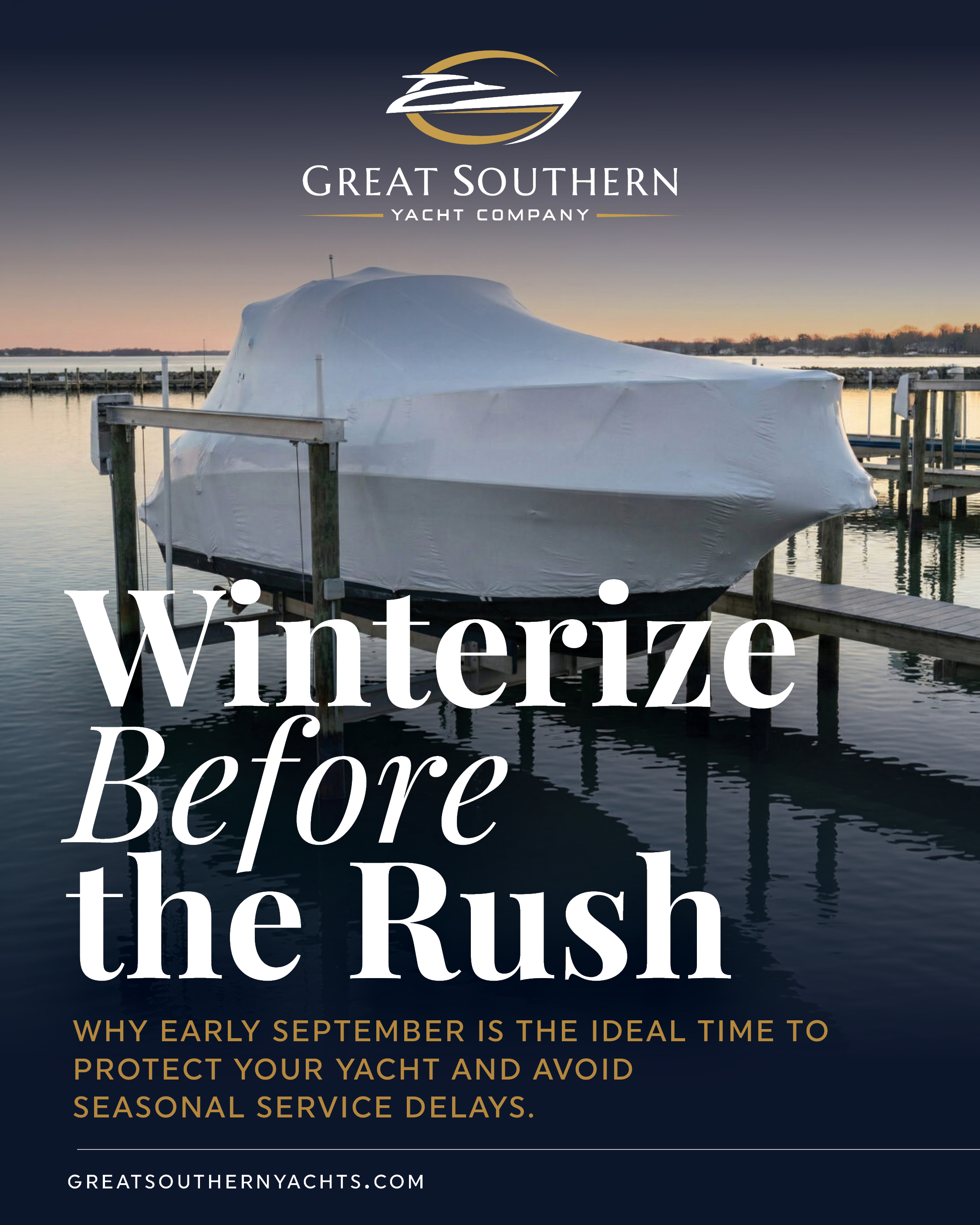
Why early September is the smartest window for Southeastern boat winterization and how to build a 12-week plan that avoids contractor bottlenecks from Destin to Charleston
Why Early September Is the Smartest Window for Southeastern Boat Winterization
In the Southeast, from Destin to Charleston, winterization looks different than it does in the Northeast or Great Lakes. Our winters are shorter and milder, but the mix of salt, humidity, freeze events, and hurricane-season remnants creates its own risks — especially for larger yachts and sportfishing vessels that live in-water most of the year.
For owners along Florida’s Emerald Coast, 30A, South Florida, and the Carolina Lowcountry, early September is the quiet “shoulder” period before contractors, yards, and marinas hit their annual bottleneck. Planning your winterization and off‑season projects now can give you better access to talent, better pricing, and a smoother timeline.
Below is a practical, 12‑week plan to help you get ahead of the rush and protect your yacht investment.
Why the Southeast Still Needs a Winterization Strategy
Even if you rarely see ice in Destin or Miramar Beach, a thoughtful winterization plan still matters for several reasons:
- Unpredictable cold snaps: Short, hard freezes can damage unprotected plumbing, A/C seawater systems, and generators.
- Salt + idle time: Boats that sit without being run or rinsed see accelerated corrosion, growth on running gear, and fuel system issues.
- Hurricane overlap: September and October are both prime boating months and peak storm season; having a plan for haul‑out or storm prep is critical.
- Contractor congestion: From late October into December, good yards and marine technicians in Destin, Pensacola, Panama City, 30A, and up through Mobile to Charleston book solid weeks in advance.
A “winterization” program in the Southeast is less about full layup and more about risk management and smart maintenance bundling while demand is lower.
Why Early September Is the Smartest Window
Early September offers a unique sweet spot for yacht owners from the Gulf to the Atlantic:
-
Contractor availability is still reasonable
- Post‑summer traffic has slowed.
- Most owners haven’t started calling for haul‑outs, bottom work, or major refits yet.
-
More control over haul‑out timing
- Haul‑out wells from Destin Harbor to Charleston marinas start to back up by late October.
- Booking now lets you choose tides, weather windows, and travel timing that fit your schedule.
-
Better sequencing of work
- You can align mechanical service, bottom paint, electronics upgrades, and interior work in a logical order rather than whenever contractors can “squeeze you in.”
-
Options if you’re planning to sell
- If you’re considering listing your yacht with a Destin or 30A yacht broker this winter or spring, early September gives you time to tackle survey‑flag items proactively.
- A cleaner survey and updated service history can materially strengthen your market position.
A 12‑Week Winterization Plan: Destin to Charleston
Every yacht is unique, but most owners can follow a similar cadence. Think of this as a framework you can scale up or down depending on whether you own a 30‑foot center console or a 90‑foot motor yacht.
Weeks 1–2: Assess, Prioritize, and Reserve Yard Time
1. Create a simple “layup objectives” list
Decide what you want your boat to look like by January:
- Do you want all major services current?
- Planning cosmetic upgrades? (paint, soft goods, teak work)
- Want the boat fully prepped for a spring sale?
- Expect to keep cruising lightly through the winter instead of full layup?
Clarifying your goals informs everything that follows.
2. Book the hard‑to‑get resources first
In early September, call:
- Local yards and travel lift facilities (Destin, Sandestin, Panama City Beach, Pensacola, Orange Beach, Mobile, Jacksonville, Savannah, Charleston)
-
Specialized marine contractors:
- Diesel mechanics
- Generator techs
- Marine electricians and electronics installers
- Bottom paint and fiberglass/gelcoat teams
- Canvas/upholstery and interior specialists
Reserve:
- Target haul‑out dates (if needed) sometime in Weeks 4–8.
- Key contractor slots clustered near your haul‑out and re‑splash dates.
Weeks 3–4: Storm Readiness and Systems Baseline
Even as you plan winterization, you’re still within peak storm season.
1. Tighten your hurricane / storm plan
- Confirm your marina’s storm policy and haul‑out priority.
-
If you’re in an exposed slip, consider:
- Temporary relocation to a more protected marina.
- Pre‑negotiated haul‑out with a nearby yard for named storms.
2. Document your baseline
Before major work:
- Photograph bottom condition, running gear, hull sides, and topsides.
-
Pull engine and generator diagnostics, including:
- Operating hours
- Oil analysis (if used)
- Service intervals due in the next 6–12 months
This documentation helps with:
- Insurance claims (if needed)
- Resale value and survey prep
- Tracking contractor performance over time
Weeks 5–6: Execute Core Mechanical and Underwater Work
This is often the heart of your winterization plan.
If you’re hauling the vessel:
-
Bottom and running gear
- Bottom clean, inspect, and repaint as needed.
- Inspect through‑hulls, seacocks, transducers, and shaft seals.
- Service or replace anodes.
-
Propulsion and steering
- Check shaft alignment, props, cutlass bearings, rudder bearings.
- Address any steering play or leaks.
If staying in the water:
- Arrange diver services for bottom and running gear inspection and cleaning.
- Replace anodes in‑water where possible and safe.
For engines and generators (hauled or in‑water):
-
Schedule:
- Oil and filter changes where due.
- Cooling system checks; flush or service heat exchangers if on the schedule.
- Fuel system inspection; consider polishing for older fuel.
Addressing these items in early/mid‑fall helps ensure:
- Your yacht is protected during periods of lower use.
- You’re not competing for the last available mechanic when the first cold front hits.
Weeks 7–8: Plumbing, HVAC, and Onboard Systems Protection
In the Southeast, these systems see the most winter‑related issues.
Key focus areas:
-
Freshwater and sanitation systems
- Inspect for leaks.
- Consider non‑toxic antifreeze for exposed or poorly insulated runs in the Carolinas or inland locations more prone to freeze.
-
A/C and chilled water systems
- Flush strainers and confirm proper water flow.
- Discuss with your marine HVAC tech whether light winter operation or partial layup is best for your system and slip location.
-
Bilge and pumps
- Test all bilge pumps and float switches.
- Inspect high‑water alarms.
Owners with larger yachts between Destin and Charleston should also:
- Review shore power and battery management strategies for periods of partial use.
- Ensure monitoring systems or marina staff can alert you to power loss.
Weeks 9–10: Interior, Electronics, and Cosmetic Projects
Once critical systems are stabilized, complete the comfort and cosmetic work that’s hard to tackle in peak season.
-
Interior and soft goods
- Deep clean, dehumidify, and treat for mildew control.
- Repair or replace soft goods and headliners while humidity is lower.
-
Electronics and navigation
- Upgrade aging plotters, radar, or sounders.
- Update software and charts.
-
Exterior finishes
- Compound and wax hull and topsides.
- Address minor gelcoat or paint touch‑ups.
- Service or refinish teak.
If you plan to sell your yacht in Florida or the Carolinas in the next 6–12 months, these weeks are the ideal time to make it photograph‑ready and survey‑friendly.
Weeks 11–12: Final Review, Documentation, and Spring Look‑Ahead
Close your 12‑week window with a brief audit:
-
Confirm all scheduled services were:
- Completed
- Documented with invoices and work descriptions
- Update your maintenance log and binder.
- File photos and records where a future buyer, surveyor, or insurance underwriter can easily review them.
Then, look ahead:
-
Sketch a 2025 use plan and service calendar now:
- Spring commissioning or shakedown trips.
- Planned long‑range cruises or fishing tournaments.
- Ideal windows for your next haul‑out, if not done this cycle.
The more intentional your annual rhythm, the less likely you are to face costly surprises or schedule‑driven compromises.
When to Involve a Professional Yacht Consultant
Many owners along the Emerald Coast and in South Florida engage their yacht broker or private yacht consultant not just for buying and selling, but for:
- Reviewing yard quotes and scopes of work.
- Prioritizing projects relative to resale value.
- Coordinating logistics for cross‑Gulf or cross‑country transport.
- Preparing a yacht to list in late winter or early spring.
If you’re unsure which projects truly matter, or how your winterization decisions might affect market value, that extra layer of guidance can prevent missteps and unnecessary expense.
For tailored guidance on winterization planning, marina and slippage strategy, or preparing your yacht for sale from Destin to Charleston, contact Great Southern Yacht Company to speak directly with a licensed broker and private yacht consultant.