
Yacht
Brokerage
Refined
Strategic guidance for buyers and sellers who expect more.
View All Listings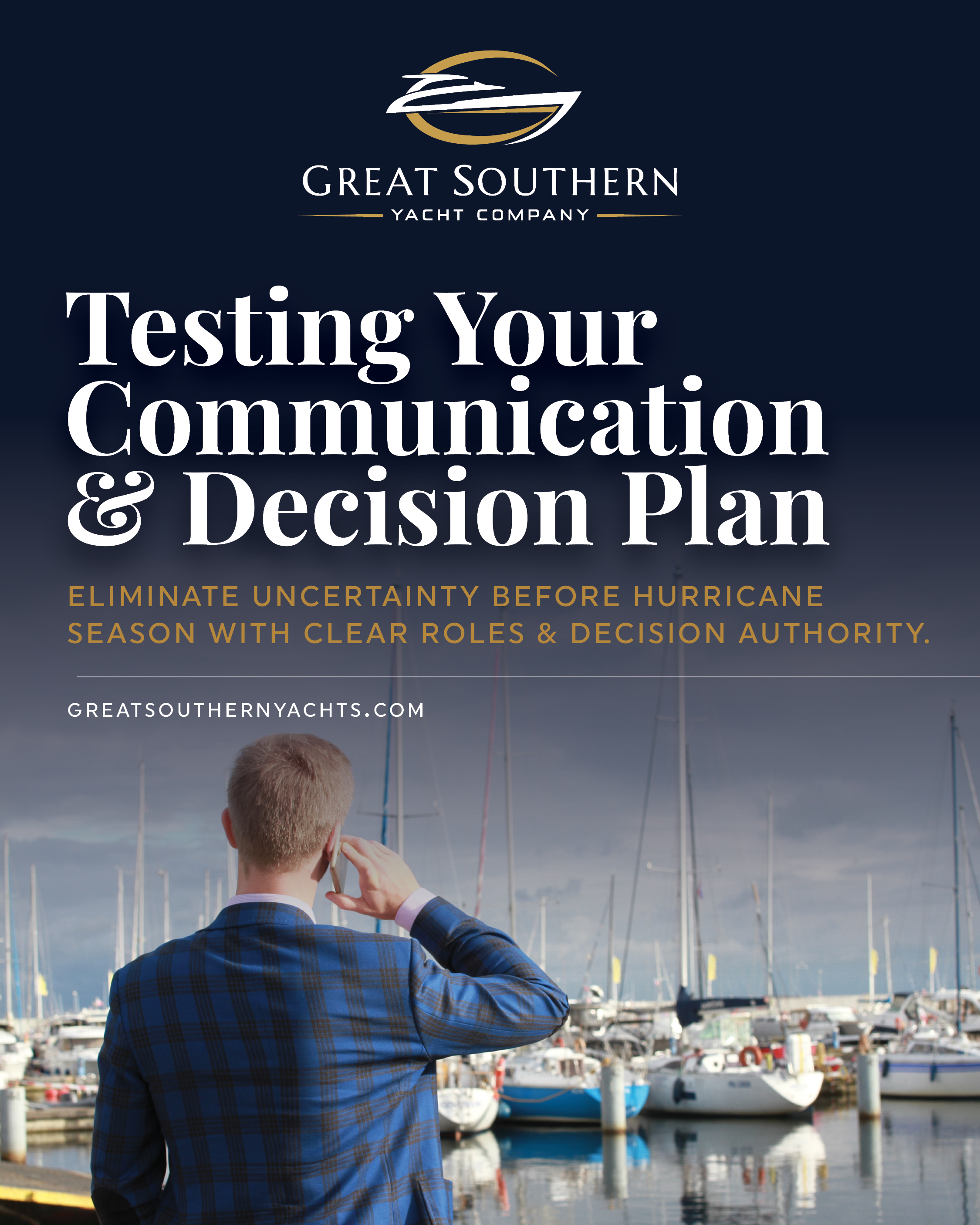
If you rely on remote management, test your communication plan and decision authority today so there’s no ambiguity when watches turn to warnings
Remote Yacht Management: Why Your Communication Plan Matters Before the Weather Turns
When you rely on remote yacht management, everything works smoothly—until it doesn’t. Weather changes, systems fail, and small misunderstandings can become expensive or unsafe problems. The difference between a minor inconvenience and a crisis often comes down to one simple factor: how well you’ve defined and tested your communication and decision-making plan.
For yacht owners along Florida’s Emerald Coast, South Florida, and beyond, now is the time to clarify who does what, when, and how—before watches turn to warnings.
Why Remote Management Demands a Clear Plan
Many owners today manage their yachts from a distance:
- Seasonal residents keeping a yacht in Destin, Sandestin, Miramar Beach, or 30A
- Owners with a vessel kept in South Florida while they live elsewhere
- National or international owners who rely on captains, managers, or local service teams
In each scenario, you depend on others to execute your wishes when you’re not there. That dependency works only if:
- Everyone understands their role and level of authority
- Communication lines are direct and reliable
- Money, risk, and responsibility are clearly allocated
If those elements are not defined and tested in advance, bad weather, mechanical issues, or marina-related decisions can quickly become confusing and stressful.
From “Watches” to “Warnings”: Where Ambiguity Hurts Owners
The jump from a tropical storm watch to a hurricane warning—or from “routine maintenance” to “critical system failure”—is when weak plans show their flaws.
Common pain points we see as private yacht consultants include:
- Unclear authority: The captain expects owner approval for urgent decisions; the owner assumes the captain will “just handle it.” Precious hours are lost.
- Delayed responses: Key calls, texts, or emails go unanswered because nobody knows who is “on point” after hours or during travel.
- Conflicting instructions: Different family members, partners, or managers give different guidance to the captain or marina.
- Financial surprises: The captain authorizes emergency haul-out or storm preparation costs that the owner didn’t realize would be significant.
These scenarios are avoidable. The solution is a realistic, written, and tested communication and decision authority plan tailored to your yacht, your risk tolerance, and your operating areas.
The Three Pillars of a Solid Remote Management Plan
1. Clear Decision Authority
Start by defining who can make which decisions, under what conditions, and with what spending thresholds.
Consider documenting:
-
Routine operations
- Who approves fuel, standard maintenance, and slip changes?
- Does your captain have standing authority up to a defined dollar amount?
-
Weather and storm prep
-
At what forecast level (e.g., tropical storm watch, hurricane watch, specific wind speeds) does the captain have full authority to:
- Haul the boat
- Move to a safer marina or hurricane hole
- Add lines, fenders, or storm gear
- When is consultation required, and what if you’re unreachable?
-
At what forecast level (e.g., tropical storm watch, hurricane watch, specific wind speeds) does the captain have full authority to:
-
Emergency decisions
- Medical emergencies, significant mechanical failures, or collision/grounding events
- Who is empowered to act immediately?
- Which insurance, legal, and documentation steps need to follow?
Clearly defined authority protects both the owner and the professionals acting on their behalf.
2. Structured Communication Channels
Next, determine how you will communicate, in what order, and through which tools.
Your plan might include:
-
Primary and backup contacts
- Owner
- Spouse/partner or co-owner
- Yacht manager or primary captain
- Secondary captain or trusted local contact
-
Preferred communication methods
- Text or phone for urgent items (storms, mechanical failures)
- Email for non-urgent updates and documentation
- Shared digital folder or platform for logs, invoices, photos, and survey reports
-
Expected response times
- What’s considered “urgent”?
- How long should your captain wait for your response before executing pre-authorized plans?
The goal is that everyone involved—especially remote owners—knows exactly how information will flow when time is critical.
3. Practical, Tested Procedures
A plan that only exists in theory often fails when it’s first needed. Instead, treat your communication and authority framework like a critical system on board: you test it.
Examples of what to test:
-
Storm scenario drill
- Simulate a tropical storm watch becoming a hurricane warning.
- Have your captain or local manager act as they would in reality: call, text, or email you according to the plan.
- Confirm: Were the steps clear? Did anyone hesitate, misunderstand, or overstep?
-
After-hours mechanical issue
- Pretend the boat develops a serious issue on a Friday night.
- Walk through who is contacted, what documentation is shared (photos, videos, engine data), and what level of repair is authorized until Monday.
-
Documentation flow
- Ensure service invoices, yard estimates, and insurance communication are shared consistently and stored somewhere you—and your advisors—can easily access.
If you are buying or selling a yacht in Florida or nationally, this kind of tested process is just as important as the vessel’s technical survey. It shapes your real-world ownership experience.
How a Fiduciary-First Yacht Broker Can Help
A knowledgeable Florida yacht brokerage that operates as a private yacht consultant does more than facilitate a sale. At Great Southern Yacht Company, our buyer and seller representation often includes:
- Discussing realistic remote-management frameworks during the purchase process
- Advising on marina and slippage strategy along the Emerald Coast, 30A, Destin, and South Florida
- Coordinating nationwide logistics and delivery with your communication and authority structure in mind
- Helping you align captain, manager, marina, and service yard expectations so everyone operates from the same playbook
Because we are brand-agnostic and work solely in our clients’ best interests, our focus is on long-term safety, clarity, and value—not just getting a deal done.
A Simple Next Step for Remote Owners
If you rely on remote management today—or plan to, after your next purchase—take an hour to:
- Write down who is responsible for what, in routine, storm, and emergency conditions.
- Share and discuss that plan with your captain, local contacts, and family.
- Run one small test scenario to see where confusion still exists.
If you’d like help aligning those decisions with the realities of your yacht, your cruising grounds, and your long-term plans, Great Southern Yacht Company is here as a trusted advisor.
Contact Great Southern Yacht Company to discuss your yacht ownership strategy, from acquisition or sale through the real-world logistics of safe, confident remote management.