
Yacht
Brokerage
Refined
Strategic guidance for buyers and sellers who expect more.
View All Listings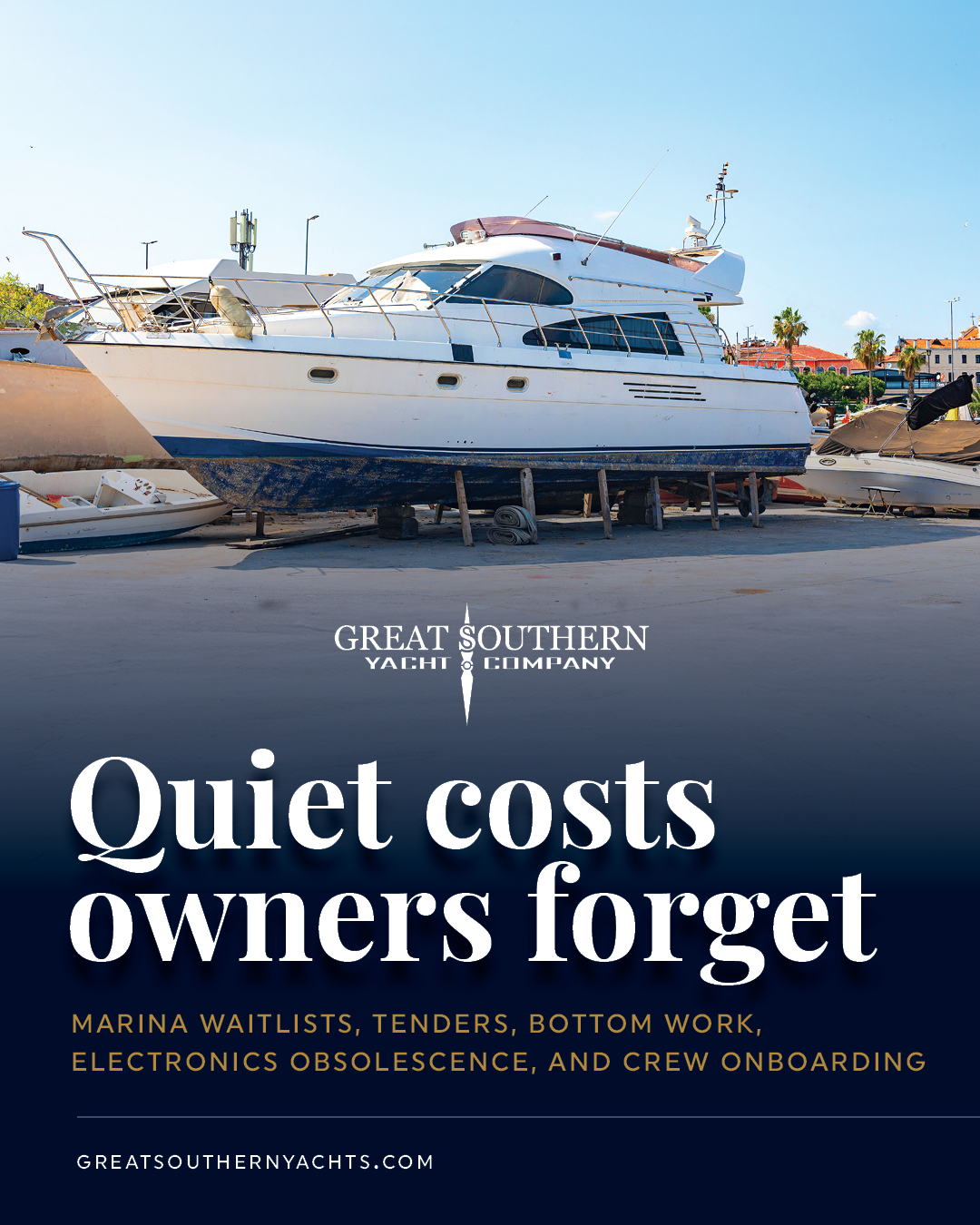
Quiet costs owners forget: marina waitlists, tenders, bottom work, electronics obsolescence, and crew onboarding
The Quiet Costs Owners Forget: Marina Waitlists, Tenders, Bottom Work, Electronics Obsolescence, and Crew Onboarding
When buyers model the budget for a pre-owned yacht, the purchase price and insurance are only the start. The most frequent surprises we help clients plan for fall into five areas: marina waitlists and slippage, tenders, bottom work, electronics obsolescence, and crew onboarding. Addressing these early brings clarity to ownership and prevents downtime after closing.
Marina Waitlists and Slippage: Availability Drives Everything
Across Florida’s Emerald Coast—Destin, Sandestin, Miramar Beach, and 30A—plus South Florida, demand for slips often outpaces supply. The right slip affects safety, usage, and resale, so align your vessel choice with realistic moorage options before you make an offer.
Key considerations:
- Waitlist reality: Popular marinas may run months to a year+ for 50’–80’ slips; larger beams face tighter inventory.
- Power and draft: Verify 50A/100A service, depth at low tide, and hurricane procedures. Confirm liveaboard policies if relevant.
- Interim solutions: Dry stack (for smaller boats), moorings, or transient slips can bridge gaps, but build them into your timeline and budget.
- Transport and delivery: If a local slip isn’t immediate, plan for temporary placement regionally with a delivery captain, then reposition when your permanent slip opens.
How we help: As private yacht consultants and a Florida yacht brokerage, we prioritize marina and slippage advisory during due diligence—contacting marinas, confirming measurements, and sequencing a realistic move-in plan so your closing and moorage align.
Tenders: Essential, But Easy to Underspecify
A tender turns a yacht into a complete platform—especially in the Panhandle’s shallow waters and South Florida’s sandbars and island runs. Owners often underestimate total tender cost and integration.
Plan for:
- Fit and handling: Weight, beam, and CG must match davits, cranes, or foredeck chocks. Towing setups need proper bridles and eyes.
- Power and maintenance: Outboard service intervals, spare propellers, fuel/water separation, and corrosion protection in warm saltwater.
- Safety and compliance: Registration, insurance, VHF/AIS considerations, lights, and a complete safety kit.
- Storage and access: Garage ventilation, charging for electric inflators, and safe launch/recovery procedures in chop.
A brand-agnostic approach keeps the focus on function. Whether it’s a RIB for a sportfisher or a jet tender for a motoryacht, we help spec, source, and sea trial options that match the mothership and your mission profile.
Bottom Work: Warm Water Accelerates the Clock
In the Gulf and South Florida, growth accumulates quickly. Expect more frequent bottom cleanings and a disciplined haul-out schedule.
What to budget and check:
- Antifouling choices: Ablative vs. hard copper paints, yard recommendations for local waters, and compatibility with existing coatings.
- Running gear protection: Propspeed or similar coatings, plus routine zinc/anode changes to manage galvanic activity.
- Yard realities: Travel-lift capacity, lead times, environmental fees, and layday policies. Plan ahead for peak seasons.
- “While you’re out” items: Through-hulls, cutless bearings, seacock service, shaft seals, and transducers—efficient to address during haul-out.
During survey, coordinate a haul to assess remaining coating life. On many pre-owned yachts, a well-documented bottom program is a negotiation lever, whether you’re aiming to buy a yacht in Florida or prepare to sell my yacht at a premium.
Electronics Obsolescence: The Fastest-Moving Line Item
Navigation, communication, and networking gear age out faster than most owners expect—both physically and digitally.
Focus areas:
- Network health: NMEA 2000 backbone integrity, power distribution, and clean terminations to prevent dim MFDs or sensor dropouts.
- Discontinued MFDs and radars: Some manufacturers sunset models and parts. Plan phased upgrades to avoid a full rip-and-replace.
- Subscriptions and charts: Software updates, FL/Bahamas charts, weather overlays, and AIS data fees belong in the annual budget.
- Integration: Engine data, autopilot tuning, radar overlay, sonar, and night-vision—ensure components talk to each other and to the crew.
- Connectivity underway: Cellular routers, Wi-Fi, and satellite options for work and remote monitoring.
Our survey process includes an electronics audit with costed paths: stabilize now, upgrade post-closing, and roadmap future replacements. This avoids surprises and keeps trips on schedule.
Crew Onboarding: Safety, Systems, and Standards
Even owner-operators benefit from professional onboarding. For larger yachts, crew readiness is central to safety and enjoyment.
Build a plan for:
- Credentials and compliance: USCG licenses, STCW where applicable, background checks, and proper payroll/insurance (including maritime workers’ comp).
- Orientation and SOPs: Systems walkthroughs, fueling procedures, emergency drills, tender ops, man-overboard, and night running protocols.
- Documentation: Checklists, maintenance logs, spares inventory, and vendor contacts so new crew can step into continuity.
- Sea trials as training: Use maiden trips for real-world practice—dockings, anchoring, and electronics routines—under a qualified captain.
As a fiduciary-first Destin yacht broker and 30A yacht broker serving clients nationwide, we introduce vetted captains and crew resources, coordinate delivery training, and structure a safe transition from survey to regular operation.
A Practical Timeline for Buyers and Sellers
- Pre-offer: Validate slip options and power requirements; prelim tender and electronics assessment.
- Under contract: Schedule haul-out, bottom inspection, and full systems survey; request electronics network report.
- Pre-closing: Confirm interim moorage or delivery plan; finalize tender sourcing; line up crew orientation or delivery captain.
- First 90 days: Execute bottom work if needed, complete critical electronics upgrades, and run safety drills. Establish a maintenance calendar aligned with local waters and usage.
Clarity around these “quiet costs” reduces friction, protects value, and keeps the focus on time on the water. Whether you’re evaluating a trawler, a sportfishing vessel, a cruiser, or a megayacht, a careful plan turns ownership into a confident, repeatable experience.
Ready for a clear, fiduciary-guided path to purchase or sale? Contact Great Southern Yacht Company for a private consultation on marina placement, sourcing, surveys, logistics, and contract-to-close management across the Emerald Coast and South Florida.