
Yacht
Brokerage
Refined
Strategic guidance for buyers and sellers who expect more.
View All Listings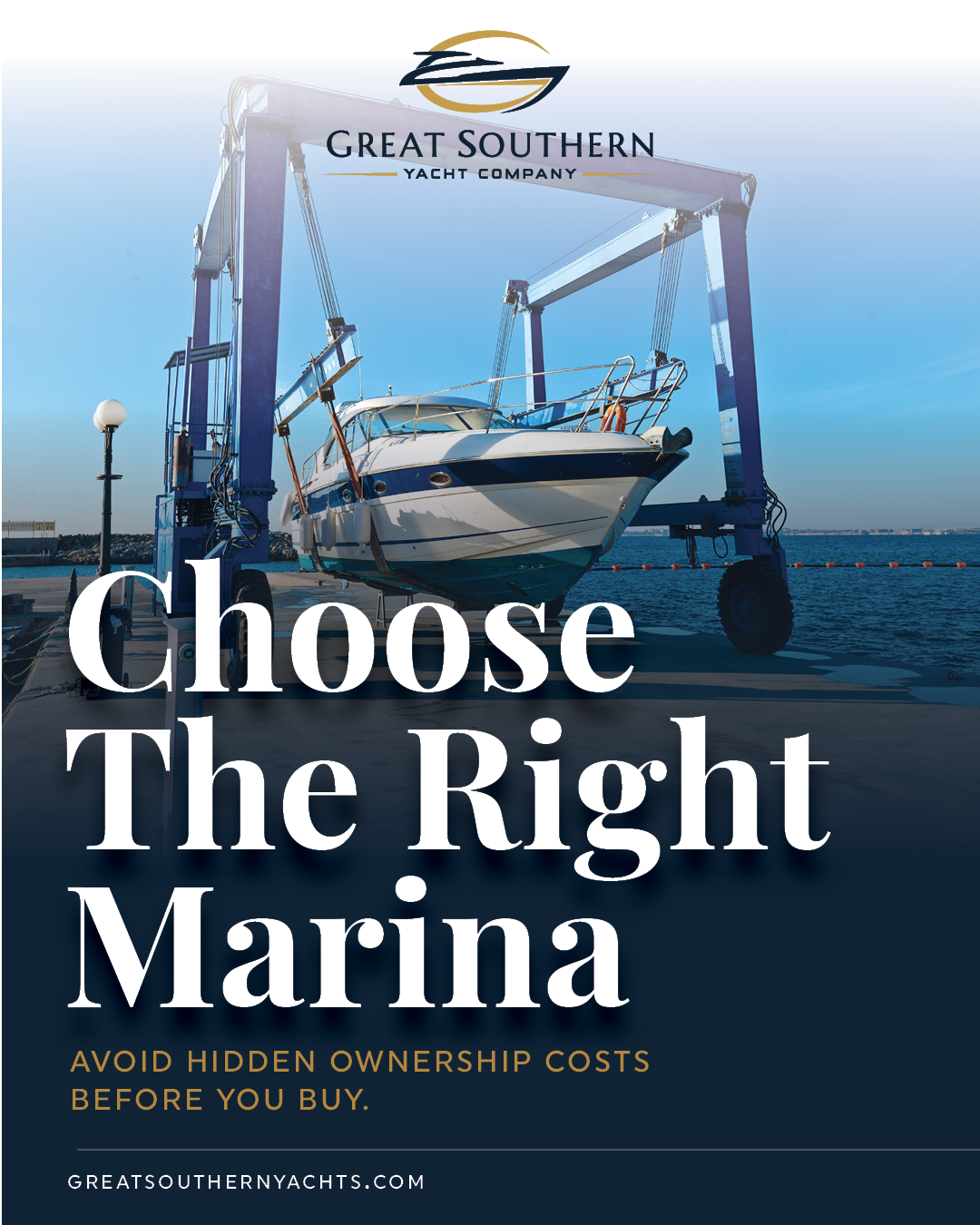
Service access can be a hidden cost—ensure your marina has lift capacity, technician access, and parts support for your chosen brand and systems. Guidance before you purchase matters
The Hidden Cost of Yacht Ownership: Service Access, Lift Capacity, and Parts Support
Buying the right yacht is only half the equation. The other half is making sure your home marina—and your region—can actually support the vessel you choose. Service access is a hidden cost that quietly affects downtime, annual budget, and day-to-day enjoyment. Before you sign a contract, confirm that your marina and nearby service network can haul, maintain, and supply the brand and systems aboard your yacht. Guidance before you purchase matters.
Why Service Access Drives Total Cost of Ownership
- Downtime is expensive: Waiting weeks for a haul-out, a certified technician, or backordered parts can cancel trips and rack up storage fees.
- Travel to service adds costs: Running (or transporting) a boat hundreds of miles to find a lift or specialist adds fuel, crew, and delivery expenses.
- Resale value is affected: Buyers and surveyors will discount vessels that are difficult to service in their intended cruising area.
A wise acquisition plan looks beyond the vessel to the local infrastructure that keeps it operating safely and predictably.
Lift Capacity: Can Your Marina Handle Your Boat?
Not every marina or yard can haul every yacht. Travel-lift capacity, beam, and draft limitations can quickly become bottlenecks.
Key considerations:
- Tonnage and beam: A 60–70’ sportfisher or motoryacht may require a 100–220-ton lift and sufficient beam clearance. Confirm the yard’s max tonnage, beam spread, and sling spacing.
- Draft and approach depth: Deep-draft trawlers and megayachts may be limited by channel depth or tide windows for haul-out.
- Haul-out waitlists: High season, pre-hurricane periods, and spring commissioning create backlogs. Ask about lead times and emergency haul-out provisions.
- Insurance and procedures: Yards often require proof of insurance, a strap plan, and isolation for lithium or specialized systems.
If your local marina can’t haul your boat, factor the cost of running to a capable yard or scheduling mobile services that can work in-water.
The Technician Ecosystem: Your Yacht’s Support Network
Modern yachts are integrated platforms—engines, pods, stabilizers, generators, watermakers, and electronics each require qualified care. Availability of certified technicians can vary widely by region.
What to verify:
- Engines and drives: Determine whether there are factory-authorized technicians for your brand (e.g., CAT, MAN, MTU, Volvo Penta IPS, Cummins) within reasonable distance. Warranty and software access often require authorization.
- Stabilizers and gyros: Systems like fin stabilizers and gyros require brand-trained techs for installations, fluid changes, and calibrations.
- Generators and hotel systems: Onan, Kohler, or Northern Lights support; watermakers; HVAC; and bow/stern thrusters all have different parts and service pathways.
- Electronics: Garmin, Raymarine, or Simrad dealer networks affect upgrade options, warranty claims, and troubleshooting speed.
- Mobile vs. yard-based service: Some regions have strong mobile technician networks; others rely on full-service yards with long queues.
A serviceable yacht is one supported by a real, reachable talent pool—not just a name on a directory.
Parts Pipelines and Warranty Support: Time Is Money
Even with the right techs, you need parts when you need them.
- Lead times: Certain engine injectors, aftercooler cores, pod drive components, or control modules can have multi-week lead times. Ask suppliers for typical availability on wear items.
- Stocking practices: Does a nearby dealer stock common parts for your brand, or is everything drop-shipped?
- Warranty centers: If you plan to buy a yacht in Florida and cruise the Gulf Coast, ensure warranty claims can be processed locally without hauling to South Florida.
Planning around the parts pipeline reduces delays and emergency freight costs.
Regional Realities: Emerald Coast, South Florida, and Nationwide
- Florida’s Emerald Coast (Destin, Sandestin, Miramar Beach, 30A): Excellent marinas and cruising grounds, but limited heavy-lift options compared to larger metro markets. Seasonal demand and storm preparedness create haul-out pressure. Pre-booking and a clear yard plan are essential.
- South Florida: Dense service ecosystem with major lifts, specialists, and parts availability for luxury yachts and megayachts. Labor rates can be higher; scheduling still matters during peak season.
- Nationwide logistics: If your dream boat is in the Northeast or West Coast, factor transport or delivery captain costs, insurance, and post-arrival punch list scheduling at your home marina.
A knowledgeable Destin yacht broker or 30A yacht broker should connect your specific vessel choice to the realities of your service environment—before you make an offer.
How We De‑Risk Service Access Before You Buy
As a fiduciary-first, brand-agnostic Florida yacht brokerage, Great Southern Yacht Company approaches each acquisition as private yacht consultants—not sales intermediaries. Our due diligence includes:
- Marina and slippage advisory: Verify slip length, beam, shore power, draft, hurricane plans, and haul-out availability at your target marina.
- Capacity checks: Confirm travel-lift tonnage, beam spread, approach depth, and emergency haul procedures at nearby yards.
- Technician mapping: Identify certified engine, drive, stabilizer, generator, and electronics support within your operating radius.
- Parts intelligence: Call supplier networks for real-world lead times on key components for your chosen brand and systems.
- Budget modeling: Incorporate haul-out rates, seasonal surcharges, delivery/transit costs, and likely maintenance intervals into your ownership plan.
- Contract-to-close planning: Align survey and sea trial locations with capable yards, secure dockage, and prebook immediate post-closing service as needed.
This clarity-led process removes uncertainty and helps ensure the yacht you love is practical to own where you intend to use it.
A Quick Pre‑Purchase Service Access Checklist
- Can my local yard lift my vessel’s weight and beam? What’s the approach depth?
- Who are the nearest authorized technicians for my engines, pods, stabilizers, generator, and electronics?
- What are typical wait times for haul-out and for mobile service in peak season?
- How available are critical parts and filters locally? What are standard lead times?
- What are hurricane haul-out or storm plans for my marina? Am I on a priority list?
- If I must run to another yard, how far is it and what will that delivery cost?
- Do yard policies require specific insurance certificates, strap plans, or environmental procedures?
- Will my warranty claims be supported locally, or do they require travel?
Answer these questions early and you’ll protect both your time and your budget.
Great Southern Yacht Company has guided buyers and sellers since 2011 across the Emerald Coast, South Florida, and nationwide. If you’re evaluating a vessel and want clear, proactive advice on marina fit, service access, and ownership logistics, speak with our team.